Suzuki Ignis EV Is Back, and It Weighs Just 1,080 kg
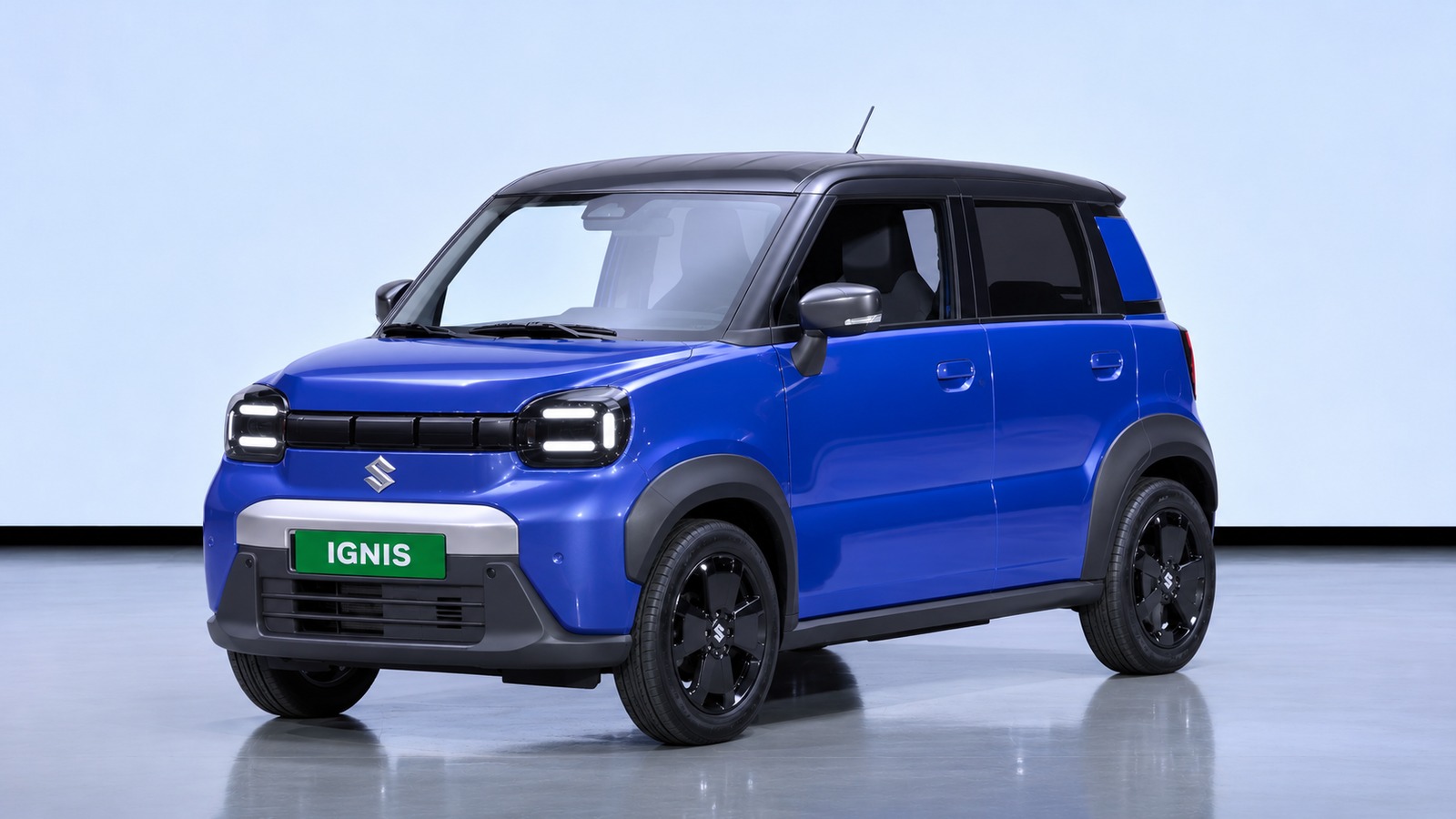
Representative image (AI-generated)
Suzuki has brought back the Ignis name, and this time there is no engine under the bonnet. The all-new Suzuki Ignis EV, revealed in a world premiere on 25 November, is the company's first compact EV built for global markets, and it weighs no more than 1,080 kg. Suzuki spent a good part of the presentation making that number the point.
For India, the badge is what matters. This is the same Suzuki whose e Vitara Maruti already builds and sells here, from ₹15.99 lakh ex-showroom, or ₹10.99 lakh if you take the battery on subscription. The Ignis is a far smaller car than that. Sales begin in Europe from summer 2027, with other markets following, and Suzuki has said nothing at all about India.
3,570 mm long, and it turns inside 4.5 m
It is small even by our standards: 3,570 mm long, 1,565 mm wide, 1,635 mm tall, on a 2,460 mm wheelbase, with 150 mm of ground clearance and 175/65 R15 tyres. Minimum turning radius is 4.5 m, and there are four seats.
Hold that against the petrol Ignis, which was 3,700 mm long. The electric one is 130 mm shorter, and Suzuki still claims room for four adults, because the battery lies flat under the floor and the body is tall and square.
The styling leans into that shape. Suzuki's design words were smart, iconic and cozy, the grille is gone in favour of a plain painted nose, and the LED lamp signature is drawn to look like digits on a display.
26 kWh and 67 kW, but no range figure yet
The battery is a 26 kWh lithium iron phosphate pack and the motor makes 67 kW with 133 Nm, driving the front wheels. Motor, inverter and reduction gear sit in a single eAxle unit on a dedicated EV platform Suzuki calls HEARTECT-e. Charging is CCS, and Suzuki says 80% takes under 30 minutes at room temperature.
What is missing is range. Suzuki said plainly at the premiere that it is not ready to publish efficiency figures for the Ignis.
There is a clue, though. Its Japanese sister car, the e SKY, has been on sale there since 16 November, rated at 310 km on a charge and 97 Wh/km. Chief engineer Tomoyuki Tsubata was careful to say the Ignis is not a renamed e SKY: the two were developed separately, for different roads and different buyers.
What this means for you
Nothing immediate. No Indian launch has been announced, and turning a European date into an Indian one would be guesswork.
What it does show is a direction. Almost every upcoming electric car in India is a mid-size SUV carrying 50 kWh or more. Suzuki is walking the other way: less battery, less weight, less cost. A 26 kWh pack in a car this light is the arithmetic behind a genuinely cheap small EV, and Maruti is better placed than anyone here to use it.
Get India's monthly EV sales data by email
Every month we pull the Vahan registration numbers apart — by segment, by state, by model — and send you what actually changed. No brand pressure, no hype.
One email a month. Unsubscribe anytime. See our privacy policy.
Read next
On This Page
Latest
- Royal Enfield Flying Flea Gets a ₹1,000 Crore Push in Tamil Nadu
- Ultraviolette X-47 Venom Review: It Took Us 18 Minutes to Overheat It
- Ather Konarc S 125 Real Range: 92 km on a Single Charge
- Ather Konarc S 100 vs Bajaj Chetak C2501: Just ₹197 Apart
- VinFast VF5 Facelift Revealed With a 43kWh Battery, and It Is Already Patented in India
- Electric Defender Confirmed for 2027, Smaller Than the Defender 90
- Mahindra and Uber Are Going After 5,000 Electric Autos