
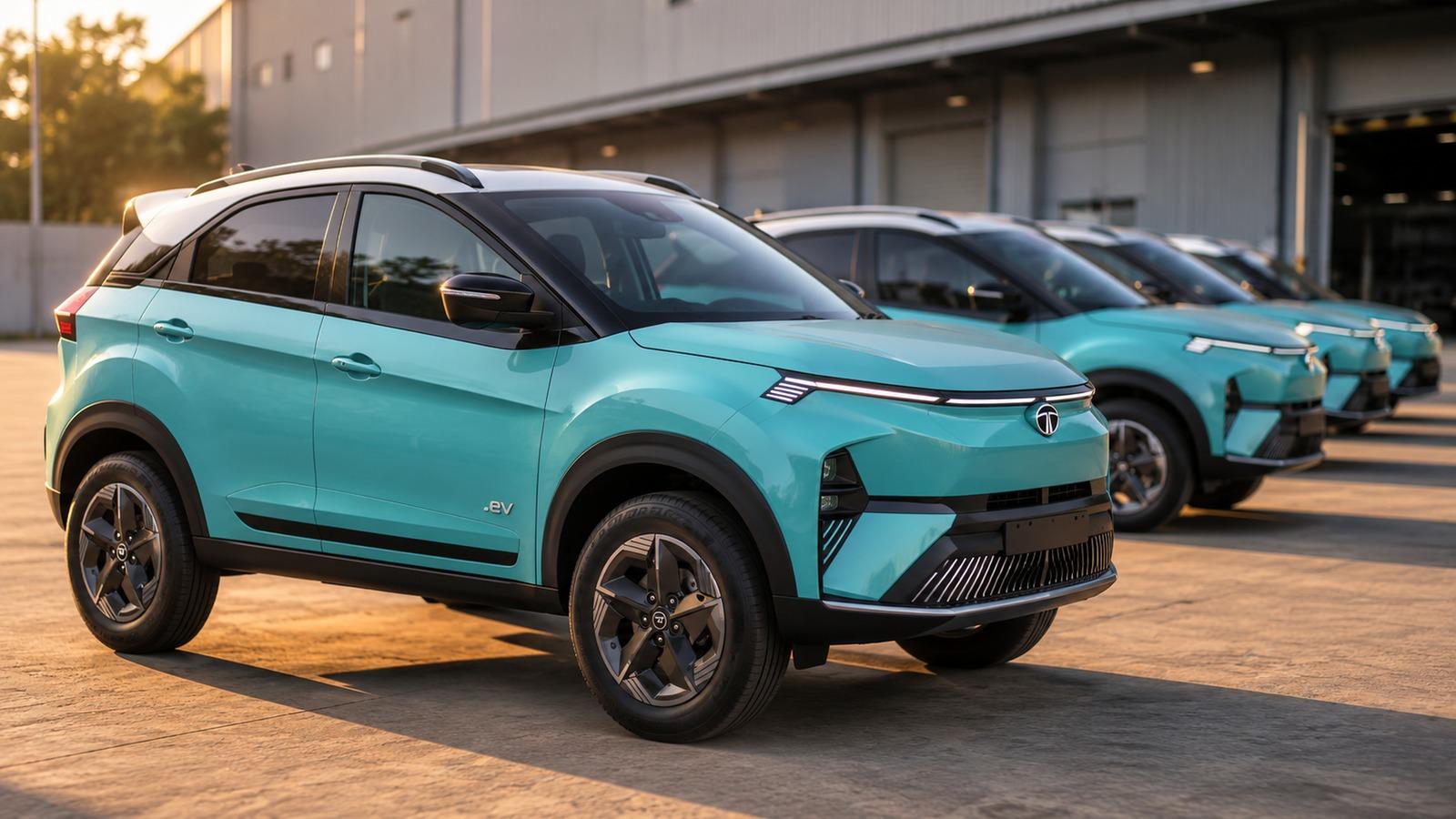
Tata is building about 16,000 electric cars a month right now, and it is still sending about a third of its buyers home empty-handed.
On the company's September-quarter earnings call, Tata Motors Passenger Vehicles MD and CEO Shailesh Chandra said Tata is filling only 60-65% of the EV orders coming in, and that supply should be near the 20,000-a-month mark within two to three months.
The 16,000 is not a plan. It is what the plants are already doing. Back in March and April, Tata was making around 9,000 EVs a month, so output has climbed about 78% in roughly half a year. Our own October registrations tally had Tata at 16,244 electric cars, so the factory number and the road number line up.
The figure Tata didn't spell out
Work backwards from Chandra's own percentage and you get the number that actually matters.
If 16,000 cars is 60-65% of demand, then real demand is running at 24,600 to 26,700 cars a month (16,000 ÷ 0.65 and 16,000 ÷ 0.60). That leaves somewhere between 8,600 and 10,700 people every month who want a Tata EV and cannot buy one.
It also means 20,000 a month does not close the gap. Against today's demand, 20,000 cars covers about 75-81% of the order book. If demand keeps growing at the pace it has this year, Tata will hit its target and still be short.
The factory is not the problem
"All the factories are running at full capacity, if not more," Chandra said, as reported by Business Standard. Tata's own lines are flexible: a shift can move from petrol Nexons to electric ones without new tooling.
The holdup sits one level below. Tata said it is working with suppliers on roughly 26 critical parts to lift volumes further. That is the part people underestimate. A battery pack is the expensive bit, but a missing motor controller, a wiring harness or a single connector parks an almost-finished car just as effectively.
It is also why Tata dealers have almost nothing standing in the yard. Chandra described EV inventory as very lean, and that was true a month ago too, when we wrote about Tata's 2-3 month supply catch-up timeline.
What this means for you
- Waiting periods should ease month by month, not in one jump. Plan for gradual improvement through to roughly February 2027.
- Don't wait for a discount. With stock this thin, the offers will stay on petrol and diesel cars.
- Flexibility is the fastest hack. Ask your dealer what is already in transit; a different colour or a lower variant can save you weeks.
- The Nexon EV, Punch EV and Harrier EV move the most volume, so their popular variants will be the last to free up.
The EVGyan take
Tata's EV sales grew about 90% in the quarter and its EV share went from around 14% at the end of last year to 23% last quarter. Those are the numbers worth watching, not the 20,000 target.
Going from 9,000 to 16,000 cars a month in six months was the hard part, and Tata did it. Getting to 20,000 needs 26 different suppliers to all deliver on time, which is a different kind of hard. We will check it against Vahan every month, because the only figure that settles this is cars delivered, not cars promised.
Not sure which EV is right for you?
Get the free EV Buying Decision Guide — real range vs claimed range, and a clear buy-or-wait answer based on your own situation.
Get the free buying guide →Get India's monthly EV sales data by email
Every month we pull the Vahan registration numbers apart — by segment, by state, by model — and send you what actually changed. No brand pressure, no hype.
One email a month. Unsubscribe anytime. See our privacy policy.
Read next
On This Page
Latest
- VinFast VF5 Facelift Revealed With a 43kWh Battery, and It Is Already Patented in India
- Tesla Model Y RWD Gets 43 km More Range, Price Unchanged
- Electric Defender Confirmed for 2027, Smaller Than the Defender 90
- Mahindra and Uber Are Going After 5,000 Electric Autos
- Mahindra M13Electro Brakes at 700 kW, Races at Just 450 kW
- Audi A4 e-tron Pushed to 2029 Over a 48-Volt Rethink
- COMAC CE-25A: China's 19-Seat Electric Plane Flies With a Crew