
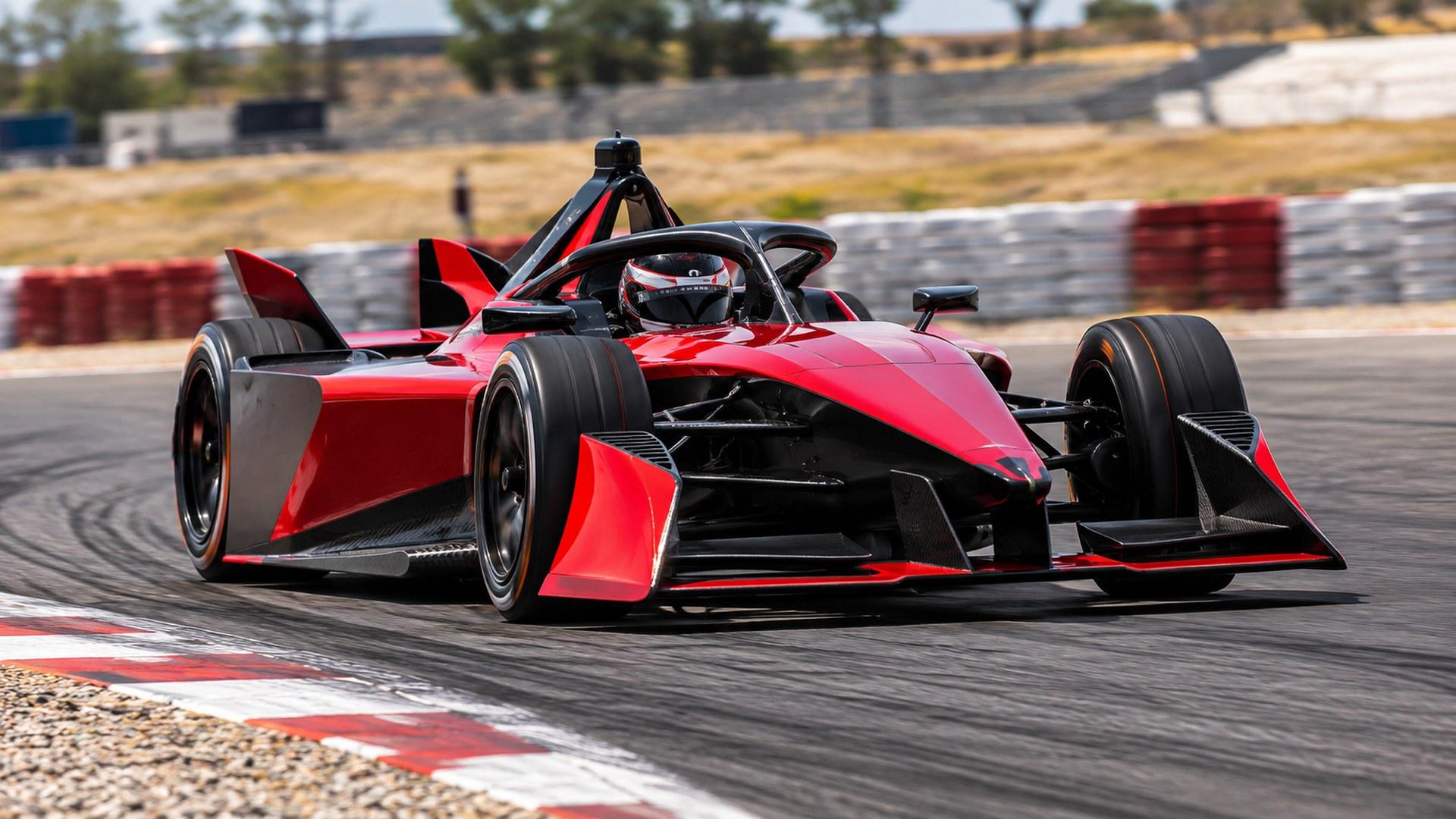
Mahindra's new Formula E car can pull 700 kW back out of its brakes. In an actual race, it is only allowed to put 450 kW down. Read that again, because it is the most interesting number in the whole GEN4 package.
The Mahindra M13Electro was revealed on 16 November through a digital launch, ahead of the first season of Formula E's GEN4 era. Pre-season testing starts in Madrid the same day.
804 bhp is the brochure figure, not the race figure
Most of the coverage you will see today leads with 600 kW, or 804 bhp. That figure is real, but it is Attack Mode and qualifying only. The FIA's own GEN4 numbers put peak race power at 450 kW, which is about 603 bhp. Attack Mode lifts it to 600 kW in short bursts.
So the honest way to describe the car is 603 bhp with a 201 bhp boost button, not a flat 804 bhp machine. Here is how GEN4 stacks up against the car it replaces, using the FIA's figures:
- Peak race power: 450 kW, up from 350 kW on GEN3
- Attack Mode power: 600 kW
- Regenerative braking: 700 kW, up from 600 kW
- Top speed: 335 km/h, up from 320 km/h
- Race energy: up to 55 kWh, a 43% increase
- All-wheel drive: now working all race long, not only in qualifying and Attack Mode
Mahindra also quotes 0-100 km/h in 1.8 seconds. The FIA's published sheets do not carry that figure, so treat it as a team claim for now.
The brakes matter more than the motor
A 700 kW regen figure on a car limited to 450 kW in race trim is not a rounding error. It means the hardware that recovers energy is sized bigger than the hardware that spends it, and the FIA reckons more than 40% of the energy used in a GEN4 race comes back through braking.
That is the part worth caring about if you will never watch a Formula E race. Regen is the one piece of racing EV technology that reaches road cars almost directly. Every time a series pushes recovery rates up, the one-pedal driving and the brake-blending software in ordinary electric cars, Mahindra's own electric SUVs included, gets another few years of development paid for by someone else.
What this means for you
Nothing you can buy, but something you can use. Next time an EV brochure quotes a peak power figure, ask how long the car holds it. Formula E is now openly running two numbers, a race figure and a boost figure, and road EVs have been doing a quieter version of the same thing for years.
Mahindra's own position
Mahindra Racing has been in Formula E since the championship began in 2013, which makes it one of the few teams still on the grid from day one. It took third place on 252 points in the 2025-26 Teams' Championship, having managed fourth and 186 points the year before.
Nyck de Vries and Edoardo Mortara both stay on, de Vries into a fourth season alongside Mortara. Team principal Frederic Bertrand has been upfront that a brand-new rulebook means the package has to be built from scratch, and that pace may not arrive straight away.
The season is due to open in Mexico City in mid-January. Two more Madrid test days follow on 18 and 20 November.
Get India's monthly EV sales data by email
Every month we pull the Vahan registration numbers apart — by segment, by state, by model — and send you what actually changed. No brand pressure, no hype.
One email a month. Unsubscribe anytime. See our privacy policy.
Read next

On This Page
Latest
- VinFast VF5 Facelift Revealed With a 43kWh Battery, and It Is Already Patented in India
- Tesla Model Y RWD Gets 43 km More Range, Price Unchanged
- Electric Defender Confirmed for 2027, Smaller Than the Defender 90
- Mahindra and Uber Are Going After 5,000 Electric Autos
- Audi A4 e-tron Pushed to 2029 Over a 48-Volt Rethink
- COMAC CE-25A: China's 19-Seat Electric Plane Flies With a Crew
- Tata EV Supply Hits 16,000 a Month, Nearly 20,000 Is Next