
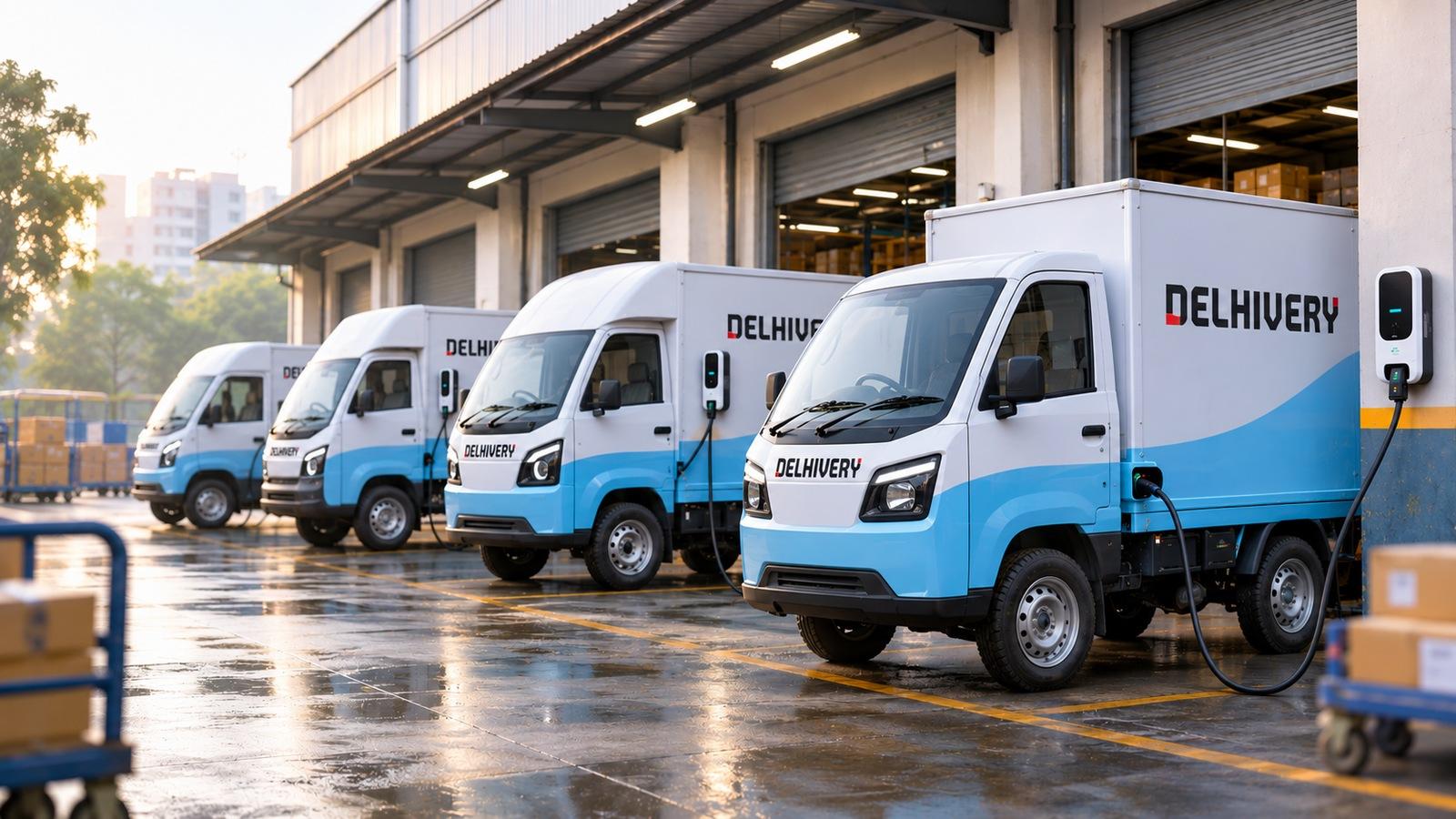
Delhivery is putting 1,500 to 2,000 electric four-wheelers on the road, and it wants all of them running inside 12 to 18 months. The company has signed MoUs with three suppliers for it, and the first vehicles roll out in Delhi-NCR.
Right now only about 12-13% of the city fleet that qualifies for this switch is electric. The target is to cross 50% in two to three years, and to reach close to 5,000 electric commercial vehicles within three years.
Who is supplying what
- Tata Motors — the Tata Intra EV
- Euler Motors — the Turbo City Plus, the first vehicle to go into service, for smaller cargo runs
- Montra Electric — the EVIATOR, expanding nationwide after already running inside Delhivery's network
Bigger EVs for heavier payloads come later. Those models have not been named yet.
The 200 km figure is the real story
Delhivery is not electrifying everything at once. It is going after vehicles that run under 200 km a day inside cities, and that choice is deliberate. On those routes an electric van already beats a diesel one on total cost of ownership: fixed daily distance, a depot to park and charge at overnight, and no highway stretch where a missing charger ruins the day. That sub-200 km city fleet is supposed to be fully electric in four to five years.
The part everyone will scroll past
The vehicle count is not the interesting bit. What matters more is that Delhivery is making advance payments to its vendors and starting a charging pilot at its own operating sites, with low-cost charging and free parking for vendor partners.
Most last-mile vehicles in Indian logistics are run by small vendor-partners, not by the big company whose name is on the box. An electric cargo van costs more upfront than a diesel one, and a two-van operator usually has neither the cash nor a place to plug in. Advance money and depot charging solve exactly those two problems. Skip them, and a 2,000-vehicle target stays a nice slide.
This is also not Delhivery's first move this year. In June it signed up with Bajaj Auto for electric cargo three-wheelers, so the four-wheeler deal sits on top of a three-wheeler fleet that is already growing.
What this means for you
If you shop online in Delhi-NCR, the van pulling up at your gate is a lot more likely to be electric over the next year.
For the makers, this is the order type that actually builds a business. Fleet buyers buy in hundreds, come back every year and pay on time. Euler gets the Turbo City Plus into one of India's biggest delivery networks, and Montra gets a national run for a vehicle that has already done the miles on these exact routes.
The EVGyan take: 2,000 vehicles will not change India's EV numbers on its own. But a fleet operator moving from a 13% share to a 50% target, with money and charging attached, is a far stronger signal than any launch event. Watch whether the Delhi-NCR pilot actually scales to other cities on schedule.
Get India's monthly EV sales data by email
Every month we pull the Vahan registration numbers apart — by segment, by state, by model — and send you what actually changed. No brand pressure, no hype.
One email a month. Unsubscribe anytime. See our privacy policy.
Read next
On This Page
Latest
- VinFast VF5 Facelift Revealed With a 43kWh Battery, and It Is Already Patented in India
- Tesla Model Y RWD Gets 43 km More Range, Price Unchanged
- Electric Defender Confirmed for 2027, Smaller Than the Defender 90
- Mahindra and Uber Are Going After 5,000 Electric Autos
- Mahindra M13Electro Brakes at 700 kW, Races at Just 450 kW
- Audi A4 e-tron Pushed to 2029 Over a 48-Volt Rethink
- COMAC CE-25A: China's 19-Seat Electric Plane Flies With a Crew