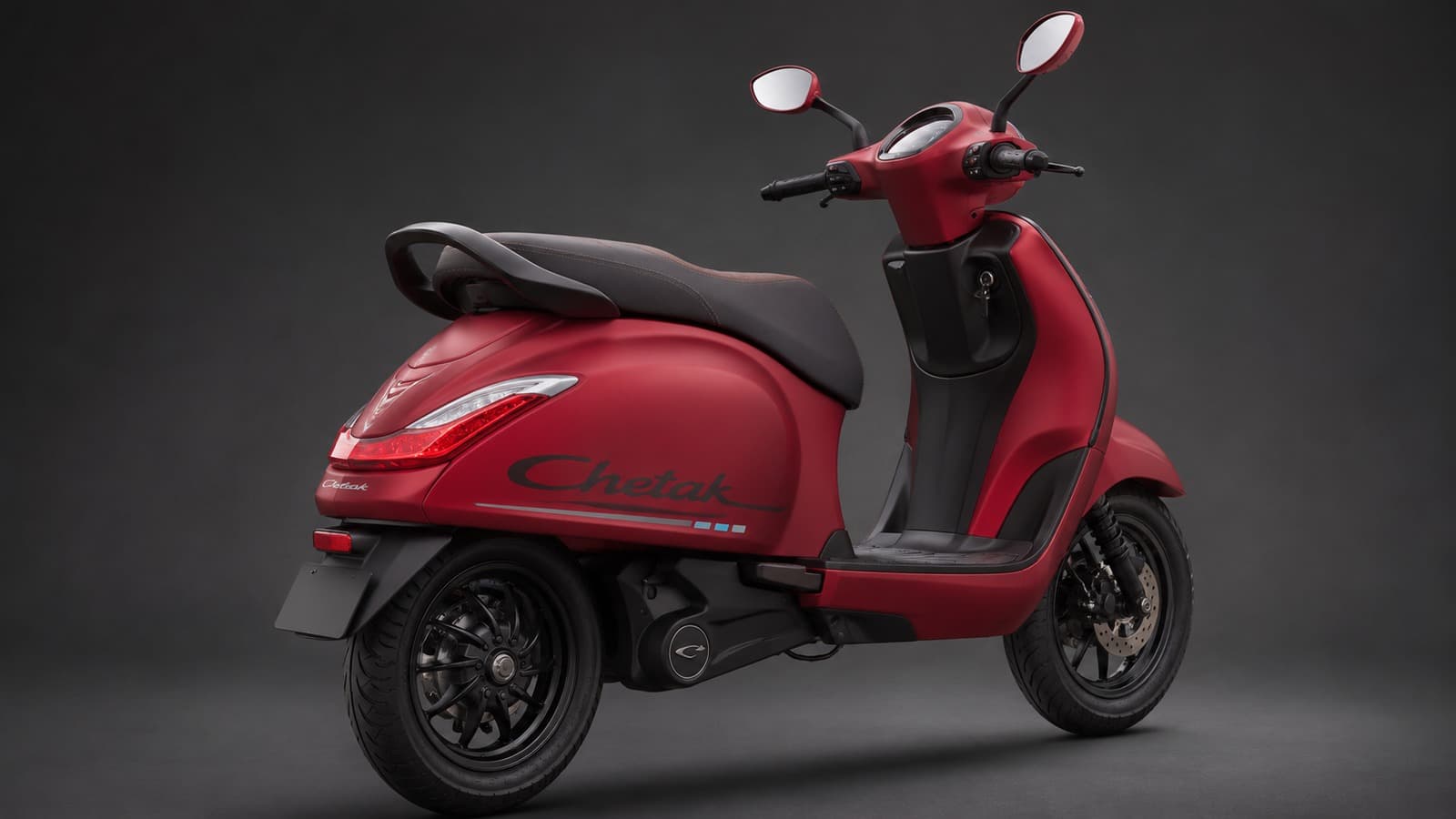
The Bajaj Chetak has crossed 10 lakh registrations in India. As of 6 November 2026, Vahan shows 10,01,135 Chetaks registered since the scooter went on sale in January 2020. That is six years and ten months to the first million.
Only two other Indian electric scooter brands have done it. Ola Electric got there first, crossing 10 lakh cumulative registrations in March 2026. TVS followed on 11 June 2026 with 10,04,148 units across the iQube and Orbiter. Bajaj is the third name on that list, and it arrived there in a very different way from the other two.
Ola, then TVS, then Bajaj: three very different routes
Ola reached a million on the back of an enormous early surge. It was the No. 1 electric two-wheeler brand in 2024 with 2,77,610 registrations. Then the service complaints piled up, and the volumes fell off a cliff. In 2026 so far Ola has managed 1,21,061 units. It got to 10 lakh and then went backwards.
TVS did the opposite. It built slowly, kept the iQube boring and reliable, and is now the market leader with 4,81,704 registrations in 2026.
Bajaj took the slowest start of the three and then refused to stop climbing. Look at the Chetak's annual numbers and the shape is obvious:
- 2022: 26,758 registrations, 4% share
- 2023: 75,112
- 2024: 2,01,167, up 168%
- 2025: 2,79,691, up 39%, No. 2 for the first time
- 2026 (to 6 November): 4,12,409, up 73%, 22.5% share
Six straight years of growth, and the growth rate went up in 2026 instead of flattening out. That is the part most brands cannot do. Ola could not.
2026 is the year the Chetak stopped being an also-ran
Break 2026 into quarters and the climb is relentless:
- Q1 (Jan-Mar): 1,00,615 registrations, up 24% year on year
- Q2 (Apr-Jun): 1,17,679, up 17% over Q1
- Q3 (Jul-Sep): 1,36,040, up 16% over Q2
Every quarter beat the one before it. Then came October, and Bajaj registered 49,170 Chetaks in a single month. That is the brand's best month ever, and it is more than the Chetak sold in all of 2022.
To put 49,170 in perspective: that one month is roughly two-thirds of everything the Chetak did in the whole of 2023.
This is also the first year the Chetak has gone past 3 lakh and 4 lakh in a calendar year. Five lakh in 2026 is now a live possibility. Bajaj needs 87,591 more registrations in the remaining eight weeks of the year. At October's run rate, that is under two months of work, and November and December are usually strong.
The gap nobody at Bajaj is celebrating
Here is the number Bajaj will not put in its press release. TVS is at 4,81,704 registrations in 2026 against the Chetak's 4,12,409. That is a gap of 69,295 units, or about 26% market share versus 22.5%.
Bajaj has closed a lot of ground since 2024, but it is burning through its best-ever months just to keep pace. TVS is not slowing down either: it crossed its own 10 lakh in June and has added volume every month since.
The market itself is the reason this is hard. India registered 18,32,799 electric two-wheelers in 2026 up to 6 November, and the top six brands account for about 1.60 million of them, or 88%. Behind Bajaj sit Ather at 2,99,778, Hero's Vida at 2,07,583, Ola at 1,21,061 and Greaves Electric at 84,245. Nobody in that list is standing still.
What this means for you
If you are shopping for an electric scooter, a 10 lakh number is not a marketing stat. It is a service argument.
A million scooters on the road means spare parts move faster, mechanics have seen your problem before, and the brand cannot quietly abandon the platform. Ola buyers learned the hard way what happens when volume arrives before the service network does. Bajaj started the Chetak with a nationwide petrol dealer network already in place, and that head start is the single biggest reason the Chetak's growth curve has not snapped the way Ola's did.
The current lineup runs from the Chetak C2501 at ₹96,400 (2.5 kWh, 113 km claimed) up to the 3501 at ₹1.34 lakh (3.5 kWh, 153 km claimed), with the 3001 at ₹99,500, the 3503 at ₹1.09 lakh and the 3502 at ₹1.22 lakh in between. All prices are ex-showroom. The 3503 is the one most buyers should look at first, because it gets you the bigger 3.5 kWh battery for ₹1.09 lakh without paying for the top variant's extras.
The EVGyan take
The Chetak was supposed to be a nostalgia project. Bajaj brought back a dead brand name in January 2020, sold 1,243 units that year, and plenty of people wrote it off as a marketing exercise.
Six years later it is the second-biggest electric two-wheeler in the country and gaining on the leader. The thing that made it work was not the design or the metal body. It was that Bajaj treated it like a scooter business instead of a startup, and let it grow at a pace its dealers could actually absorb.
The real test starts now. Getting to 10 lakh is a story about the past. Catching TVS is a story about whether Bajaj can hold 49,000 a month through a non-festive quarter. January's numbers will tell us more than this milestone does.
All figures in this article are retail registrations recorded on the Vahan portal, not factory dispatches or company-reported sales.
On This Page
Trending
- Oben Rorr EVO Does 7,571 km in 3 Months: Owner's Real Review
- Hero VIDA UBX 06 Pro Electric Bike Could Launch in India in 2027, Here's What We Know
- Hero VIDA VX2 Wireless Charging Revealed: Charge Without Plugging In
- Hero VIDA Project VXZ: New Electric Motorcycle Showcased at EICMA 2026
- Mahindra Electric SUV Output Jumps 50% to 12,000 a Month
- ChargeZone's 1,000 New Sites Will Carry 480kW Chargers
- Tata iRA.ev App: 4 High-Severity Flaws, Already Patched