China Rare Earth Curbs Delayed to 10 January: India's EVs Get 60 Days
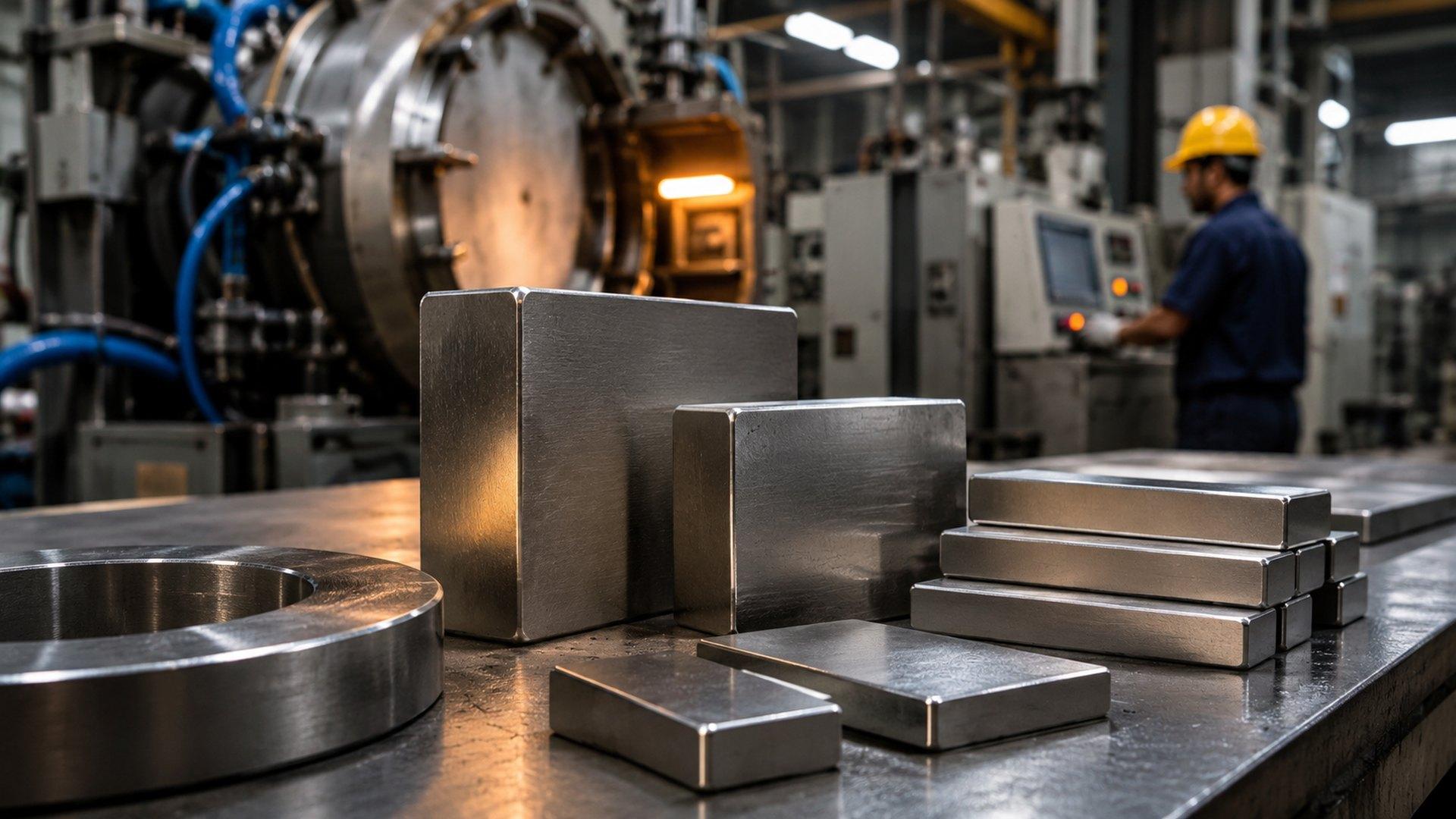
India's EV industry had 10 November circled. That was the day China's suspension of its widened rare earth export controls was due to run out. One day before the clock hit zero, Beijing moved it: China's Ministry of Commerce extended the waivers to 10 January 2027, Reuters reported on 9 November. Two more months, and not a line of explanation beyond that.
The ministry's statement was short. Reuters said it "gave no other details". So the China rare earth export controls that the auto industry has been watching since April 2025 are still on pause, and the new date to worry about is 10 January.
Why a magnet notice is an EV story
Almost every electric motor on an Indian road turns because of a permanent magnet, and the strongest ones are built from rare earth metals. India's own government puts it plainly. The Cabinet note for its magnet scheme calls these magnets "vital for electric vehicles, renewable energy, electronics, aerospace, and defence applications".
Now the number that makes everyone nervous. When it comes to the finished permanent magnets themselves, China's grip is tighter than on any other part of the chain. Work back a step and the International Energy Agency figures, cited by The National, show 91% of the world's refined magnet rare earth output coming out of China, against 60% of what gets mined in the first place. Refining is the choke point, and there is no second supplier of that size anywhere.
China's April 2025 package put seven heavy rare earths under licence. The October 2025 expansion widened the scope and pulled in more of the supply chain, including lithium battery technology. Then came the year-long pause after the Busan summit, which is what has just been stretched again. What exactly snaps back if the pause ever lapses, and how hard, is the part nobody outside Beijing can state cleanly right now.
Sixty days buys calm, not a supply chain
Two months is not enough time to build anything. It is enough time to keep order books moving, keep motor lines running and stop component buyers from panic-paying. The wider India-relevant context: the US-China trade truce from Busan was also due to expire on 10 November, and that has moved to 10 January too. Same date, same cliff, pushed back together.
For an EV maker in Pune or Hosur, the practical read is that nothing changes this quarter. The planning problem starts again in the first week of January.
India's answer is already out to tender
This is the part that gets lost when the story is told as pure geopolitics. India is not waiting.
The Union Cabinet approved a ₹7,280 crore scheme on 26 November 2025 to make sintered rare earth permanent magnets in India. The money splits into ₹6,450 crore of sales-linked incentives over five years and a ₹750 crore capital subsidy for building the plants. Here is what it is meant to buy:
- 6,000 tonnes a year of integrated magnet capacity in India
- 5 winners picked by global competitive bidding, up to 1,200 tonnes a year each
- A 7-year runway from award: 2 years to build, then 5 years of incentives
- Full chain in India, from rare earth oxide to metal to alloy to finished magnet
And it has real takers. The Ministry of Heavy Industries put out the tender in March 2026 and closed bids on 12 August, with technical bids opened the next day. Twenty bids came in for five slots, ANI reported, from names including Larsen & Toubro, Coal India, ReNew, Attero Recycling, Lohum, 20 Microns, Proterial and NEO Performance Materials. Twenty bids for five places is not a scheme nobody wants.
The government also expects India's magnet consumption to double by 2030 from 2025 levels, which is mostly an EV number.
What this means for you
If you are buying an electric scooter or car this month, this news does not touch your price. No showroom sticker moves because of a MOFCOM notice, and no launch date shifts in the next sixty days.
Where it could reach you is 2027. If the controls return and actually bite, the first things to wobble are motor supply and the launch calendar, not the price of a vehicle already on sale. That is a risk worth knowing about, not one worth delaying a purchase over.
The EVGyan take
Do the arithmetic on India's own fix and the picture gets clearer. The scheme gives winners two years to build before the incentive clock starts, and the bids were only opened in August 2026. So Indian-made sintered magnets at any real volume are a 2028 story, maybe 2029. The deadline India actually has to beat is not 10 January. It is the two or three years in which it still has to import the magnets that turn its EV motors.
That sounds like a problem, and it is. It is also the most solvable one on India's EV list. The country has the demand, it now has the money committed, and twenty bidders have already put their hands up. Every extension Beijing grants is another quarter of room to get those plants standing. This one bought sixty days. The useful question is what gets built before the next notice.
Sources
Get India's monthly EV sales data by email
Every month we pull the Vahan registration numbers apart — by segment, by state, by model — and send you what actually changed. No brand pressure, no hype.
One email a month. Unsubscribe anytime. See our privacy policy.
Read next
On This Page
Latest
- Accelero's eBik Jumps From 3,000 to 12,000 Units a Year
- CATL Is at 2,520 Swap Stations and Wants 3,000 by December
- China Exported 582,000 EVs in October, 16x India's Market
- Force Traveller EV Arrives Q1 2027, ₹3,000 Crore Behind It
- Honda Ohio Plant: $3 Billion for Hybrids, Not EVs
- HPCL EV Charging Network Now 5,981 Points, 176 for Swapping
- Mercedes EQS Did 867 km on One Charge, 116 km Over Its Rating