HPCL EV Charging Network Now 5,981 Points, 176 for Swapping
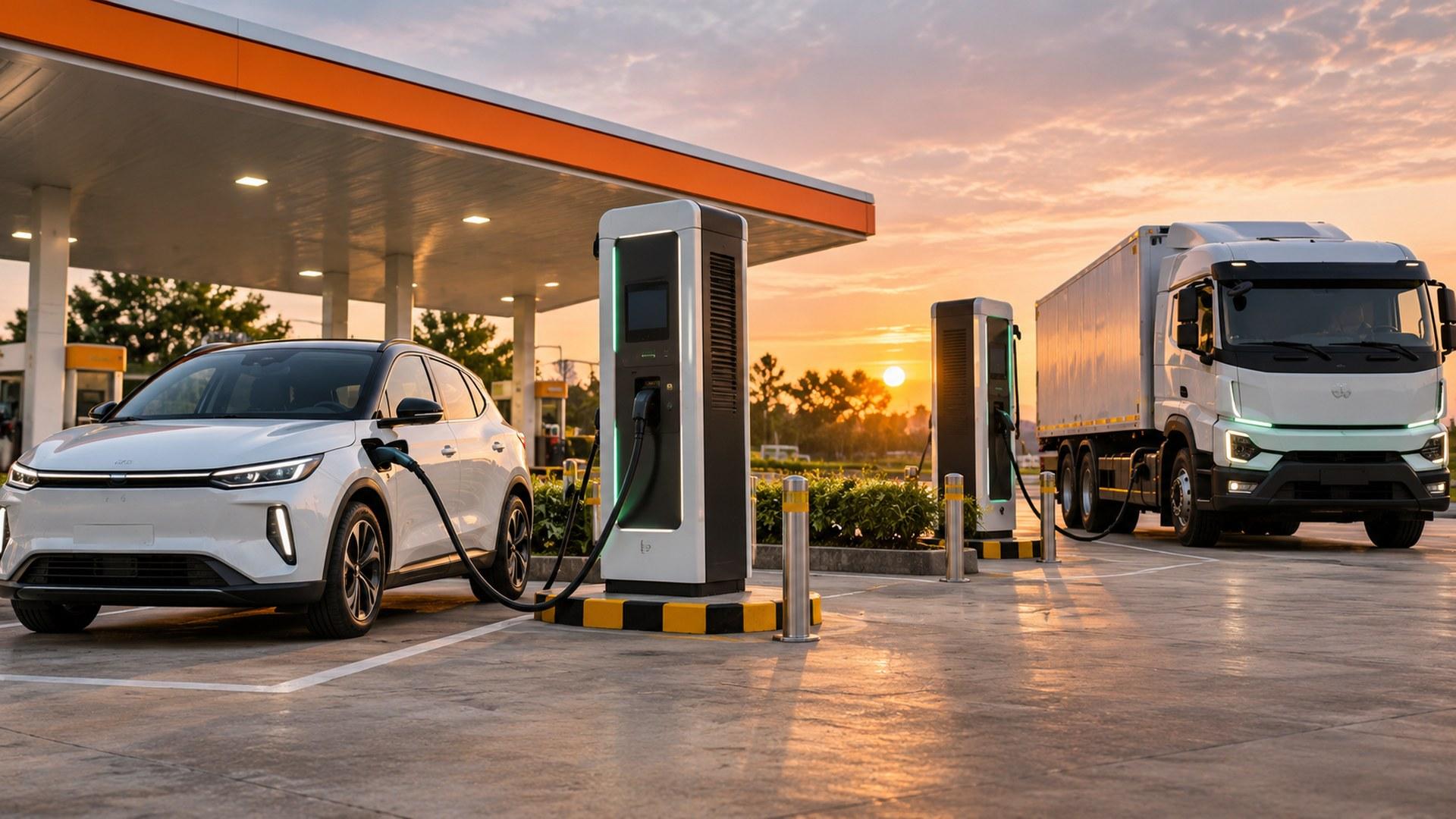
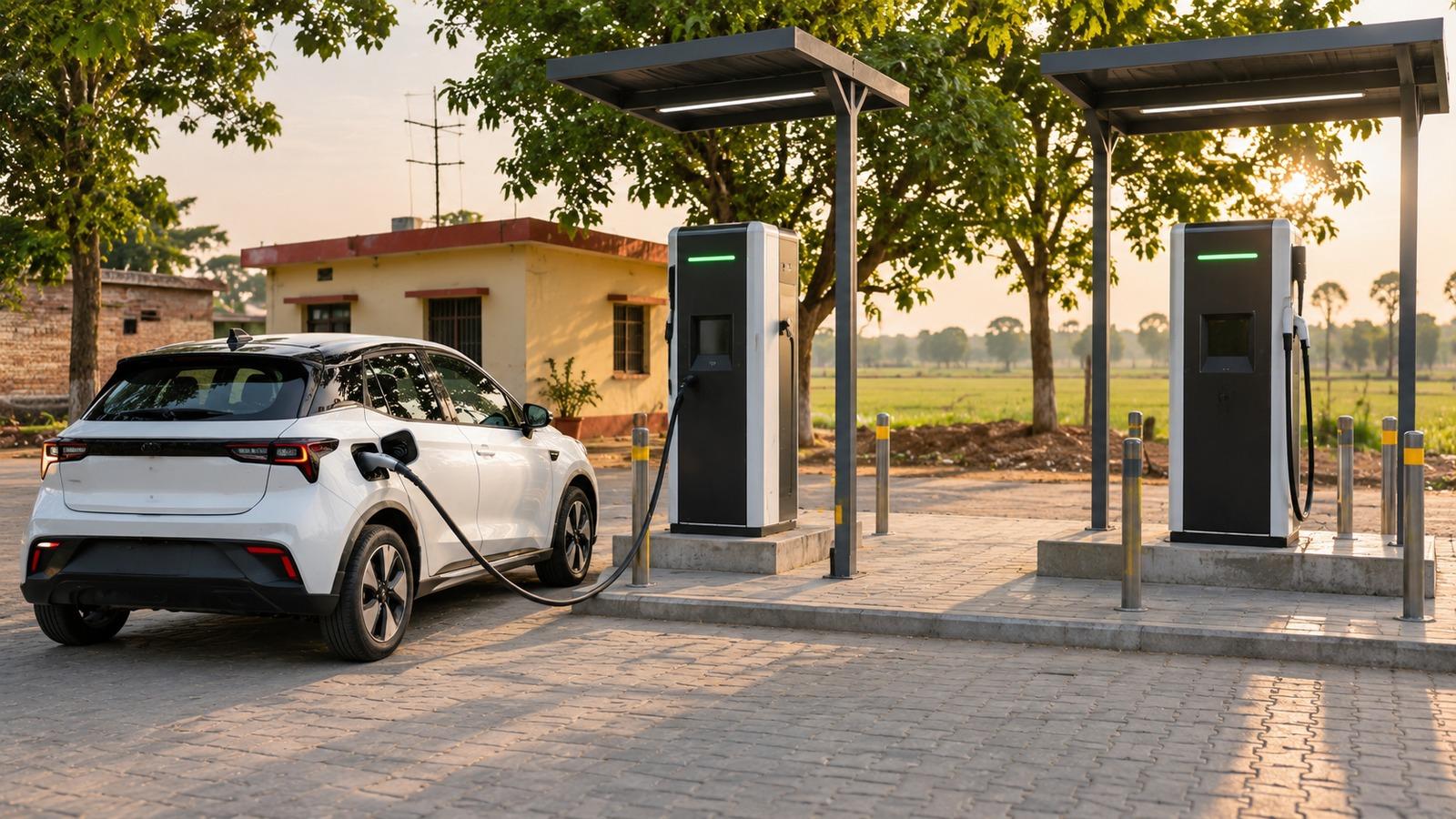
HPCL's EV charging network now stands at about 5,981 points, and 176 of them do not charge your vehicle at all — they swap its battery. The figure is as of 1 November 2026, and it comes from an interview the company's charging boss gave to EVreporter, published today.
Kushal Kumar Banerjee, CGM for Retail Strategy and Business Development at HPCL, laid out the full shape of the network to EVreporter: roughly 2,180 AC slow chargers, 3,627 DC fast chargers, and 176 battery-swapping stations, spread across more than 25,000 petrol pumps. The DC side is mostly CCS2, which is the plug almost every electric car sold in India uses.
Add the three numbers and you get 5,983, so "about 5,981" is HPCL rounding its own count. Worth saying plainly, because the phrase "5,981 chargers" is going to travel, and 176 of those are swap cabinets for two-wheelers, three-wheelers and trucks.
HPCL is already at its own target, five months early
Here is the part the interview does not connect. In October, HPCL's network was reported at 5,826 facilities across 25,238 outlets as of 1 September, up about 8 percent from around 5,400 in March. Two months later it is 5,981. That is 155 added in September and October, roughly two and a half a day.
Banerjee's stated near-term milestone is roughly 6,000 chargers by the close of FY27, which ends in March 2027. HPCL is 19 short of that if swap stations count, or about 195 short if only chargers do. Either way, a target set for March is nearly done in November. Someone at HPCL set the bar low.
The charger that matters is 240 kW
The more interesting number in the interview is 100. That is roughly how many 240 kW chargers HPCL plans to put on the ground, aimed squarely at electric trucks and buses, across 50 targeted highway corridors. It is also deploying 120 kW and 180 kW units.
For scale, most public fast chargers you have used on an Indian highway are 60 kW or 120 kW. A 240 kW unit is a different category of machine, and it exists because an electric truck's battery is four to six times the size of your car's.
HPCL's segment mix explains the bet. Banerjee says passenger four-wheelers account for most charging sessions today. But the money follows utilisation, and a truck depot or a freight corridor fills a charger in a way a mall parking lot does not.
The swapping side is already commercial-first. HPCL runs its 176 swap stations with Honda, Voltup, Yuma, VGreen and Blue Energy Motors, serving e-commerce fleets and trucks. Blue Energy Motors has a heavy-truck swap station at Bhiwandi on the Mumbai-Pune corridor. Energy In Motion is planning swap-and-charge hubs on Mumbai-Pune, Delhi-Jaipur and Chennai-Bengaluru.
The broken-charger problem, in HPCL's own words
Oil marketing company chargers have a reputation, and it is not a good one. Banerjee did not dodge it. He said HPCL "acknowledges industry-wide challenges with uptime and customer experience" and described a separate offline portal that tracks which stations are actually working, raises a ticket and closes it within a set time.
He also gave the number that explains why so many chargers sit idle and unloved: a DC fast charger typically needs 15 to 25 percent utilisation before the economics look attractive. Below that, nobody has a reason to fix it quickly. HPCL's answer is to stop spraying chargers everywhere and concentrate on high-traffic outlets, highway corridors, housing societies, offices and fleet depots.
The company says it is building a commercially sustainable charging business by March 2030. That is a five-year runway, stated out loud, which is more honest than most charging announcements in India.
Where the partnerships come in
- Mahindra Charge_iN — March 2026 agreement for 180 kW dual-gun chargers at HPCL outlets; the first joint station is running on the Mumbai-Pune Expressway
- Statiq — HPCL's 5,000-plus chargers plugged into Statiq's EVLinq platform so other apps can find and use them
- Snap-E Cabs — fleet access to the HP e-Charge network, starting in Kolkata and eastern India
- PM E-DRIVE — around 323 charging stations planned under the scheme, with the 240 kW units and the 50 corridors as the focus
Under FAME-II, HPCL set up more than 2,250 charging stations. So roughly 38 percent of today's network came out of one scheme — a useful reminder of how much of India's public charging exists because the government paid for part of it.
What this means for you
If you drive an electric car on a highway, HPCL is the network you are most likely to meet, because it sits on fuel-station land that already has power, a toilet and a tea stall at 2 am. The useful change is not the headline count. It is that HPCL has admitted the uptime problem in public and built a tracker for it. Judge it in six months by whether the chargers work, not by whether the number crosses 6,000.
If you run trucks or buses, the 240 kW corridor plan is the line to watch. India has had electric truck launches for two years and almost nowhere to charge them between cities.
The EVGyan take
5,981 is a real number and a big one — roughly 11 percent of India's public charging stations by the government's own count of 52,718, though the datasets classify things differently and are not strictly comparable. But a network that grows 155 points in two months and still calls 6,000 a March 2027 target is not sprinting. The honest read: HPCL has the best land bank in Indian EV charging and is finally pointing it at the vehicles that will actually fill a charger.
Thinking about installing a charger?
Run your own numbers on the EV Charger ROI Calculator — payback period, monthly profit and investment needed, in under a minute.
Calculate your charger ROI →Sources
Get India's monthly EV sales data by email
Every month we pull the Vahan registration numbers apart — by segment, by state, by model — and send you what actually changed. No brand pressure, no hype.
One email a month. Unsubscribe anytime. See our privacy policy.
Read next
On This Page
Latest
- Accelero's eBik Jumps From 3,000 to 12,000 Units a Year
- CATL Is at 2,520 Swap Stations and Wants 3,000 by December
- China Exported 582,000 EVs in October, 16x India's Market
- China Rare Earth Curbs Delayed to 10 January: India's EVs Get 60 Days
- Force Traveller EV Arrives Q1 2027, ₹3,000 Crore Behind It
- Honda Ohio Plant: $3 Billion for Hybrids, Not EVs
- Mercedes EQS Did 867 km on One Charge, 116 km Over Its Rating