CATL Is at 2,520 Swap Stations and Wants 3,000 by December
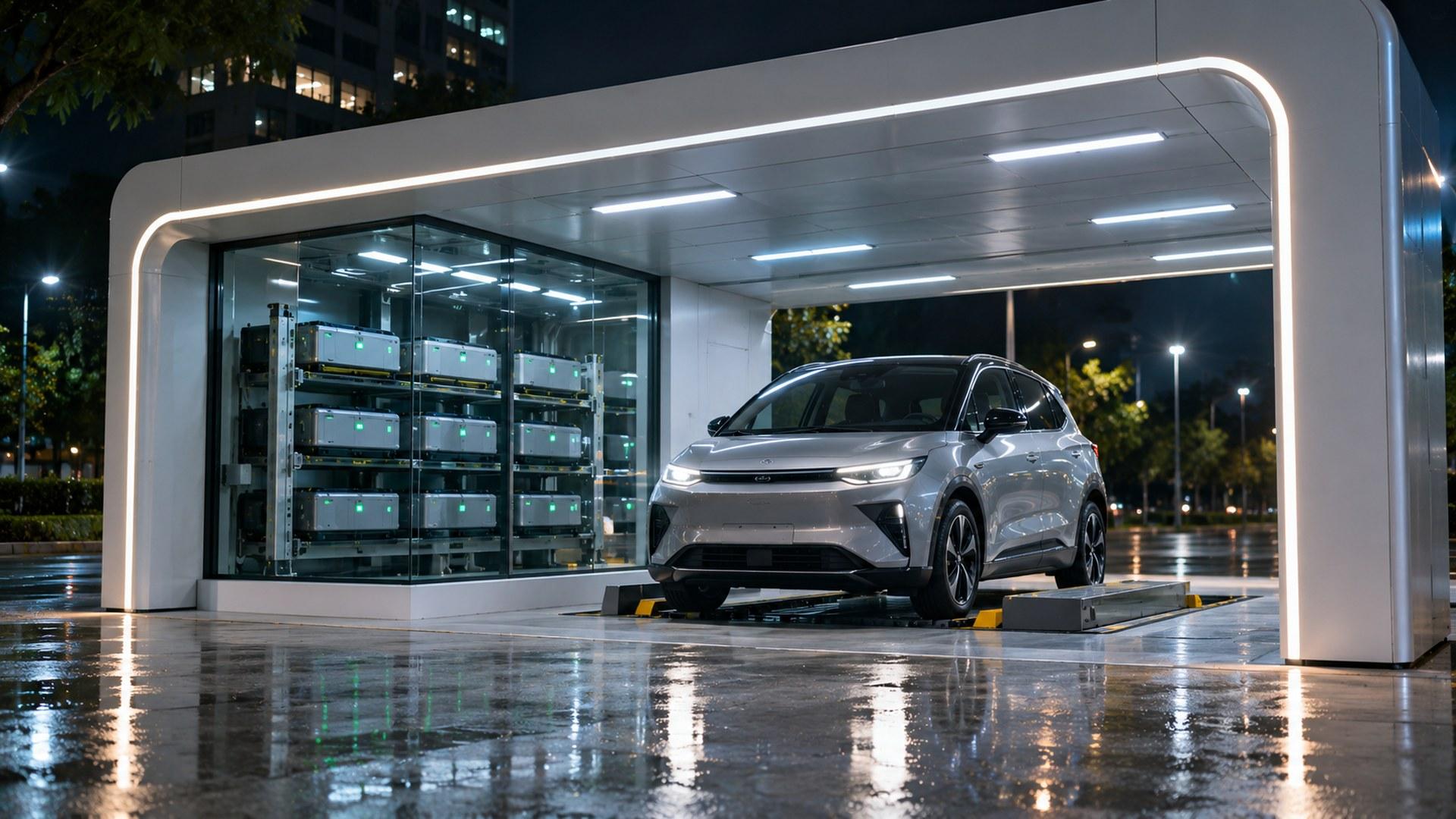
CATL has 2,520 battery-swap stations running in China and wants more than 3,000 by the end of December. The reason it is in such a hurry has less to do with swapping and more to do with a cheaper battery chemistry it needs somewhere to put.
Speaking at a Benchmark Mineral Intelligence event in Shanghai on Tuesday, CATL chairman Robin Zeng said sodium-ion batteries already give enough range for everyday city driving, and that a bigger swap network would settle the worry people have about longer weekend trips. "We need to build more swapping stations on the highways and in the cities," he said, in remarks reported by Bloomberg.
1,020 stations last December, 2,520 by September
The Choco-Swap network, run by CATL subsidiary CAES, had 1,020 stations across 45 cities at the end of December 2025. By the end of September 2026 it was at 2,520 stations covering around 200 cities and all 31 of China's provincial-level regions, with close to 20,000 battery packs circulating in the system.
That is 1,500 stations in nine months, about 167 a month. To reach 3,000 by 31 December, CATL needs 480 more in three months, which is roughly 160 a month. On its own build rate the target is not a stretch.
Sodium-ion is the point
CATL launched its sodium-ion brand, Naxtra, in April 2025, and showed a passenger car using it with Changan in February this year. The cells were quoted at up to 175 Wh/kg with a claimed range of over 400 km, and CATL says the cells still hold over 90 percent of capacity when it is minus 40 degrees Celsius outside. The company's own forecast for 2026 is 10,000 to 20,000 electric cars fitted with sodium-ion packs.
Sodium-ion is cheaper and less exposed to lithium price swings, which is the whole attraction for a battery maker. The catch is energy density: the same weight of sodium-ion gives you less range. Swapping is CATL's answer to that catch. If a half-empty pack can be exchanged in minutes at 3,000 locations, a shorter-range chemistry stops being a dealbreaker. The Choco-Swap packs are built so lithium and sodium versions work in the same station.
What this means for India
India has bet harder on swapping than almost anywhere outside China, but it has bet on two- and three-wheelers. HPCL alone runs 176 battery-swapping stations on its forecourts, and the fleet operators who use them run e-rickshaws and delivery scooters, not cars.
Sodium-ion is the part Indian buyers should actually watch. India imports nearly all the lithium it uses, and the Union Cabinet has just cleared ₹2,814 crore for lithium and nickel processing plants to reduce that dependence. A chemistry built around sodium, which India has plenty of, changes that maths for small city EVs and for grid storage long before it changes anything about a long-range car.
The honest caveat: Naxtra was launched in April 2025 and the volume target for this year is still only 10,000 to 20,000 cars. That is a pilot, not a transition.
Thinking about installing a charger?
Run your own numbers on the EV Charger ROI Calculator — payback period, monthly profit and investment needed, in under a minute.
Calculate your charger ROI →Sources
Get India's monthly EV sales data by email
Every month we pull the Vahan registration numbers apart — by segment, by state, by model — and send you what actually changed. No brand pressure, no hype.
One email a month. Unsubscribe anytime. See our privacy policy.
Read next
On This Page
Latest
- Accelero's eBik Jumps From 3,000 to 12,000 Units a Year
- China Exported 582,000 EVs in October, 16x India's Market
- China Rare Earth Curbs Delayed to 10 January: India's EVs Get 60 Days
- Force Traveller EV Arrives Q1 2027, ₹3,000 Crore Behind It
- Honda Ohio Plant: $3 Billion for Hybrids, Not EVs
- HPCL EV Charging Network Now 5,981 Points, 176 for Swapping
- Mercedes EQS Did 867 km on One Charge, 116 km Over Its Rating