43% Want an Electric Two-Wheeler, 9.9% Have Bought One: India's E2W Gap
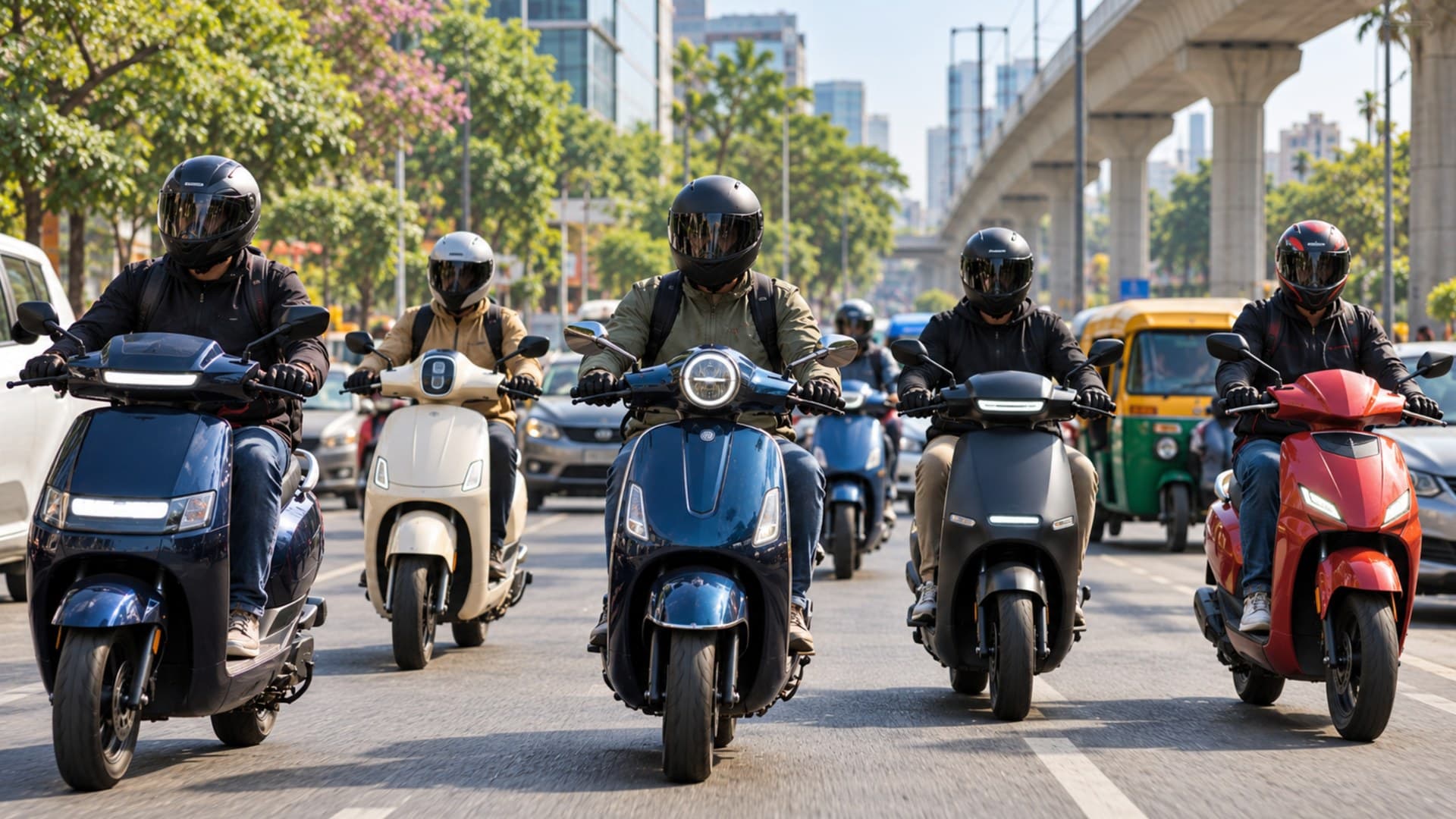
Representative image (AI-generated)
Here is the most useful number from this week: 43% of Indian two-wheeler buyers now say they would consider an electric one, but only 9.9% actually bought one as of August. That gap, roughly 33 percentage points, is the whole India e2W story in one line. Everything below is about who is trying to close it.
The 43% figure comes from a BCG report released on 26 October; the same survey put consideration at 30% in 2024. The other items here come from the Autocar Professional India EV Conclave in New Delhi on 27 October and a Maharashtra cabinet decision on 28 October, all first reported by Autocar Professional.
5 brands, 83% of the market
BCG also found that 5 brands take 83% of India's electric two-wheeler market. There are dozens of registered makers, so that is a tight table. BCG doesn't name them, but on recent Vahan months the top five has been TVS, Bajaj, Ather, Hero Vida and Ola. If you are a new entrant, the message is that showrooms and service, not specs, decide who gets the volume.
Why 43% hasn't become 43%
Two reasons, and two companies gave them on the same stage.
Ather's Chief Business Officer Ravneet Phokela put electric scooters at about 25% of scooter sales, but total e2W penetration at only 11-11.5%. The difference is motorcycles, which barely sell electric. Scooters are done arguing; motorcycles haven't started. Ather is building a motorcycle platform but hasn't picked a segment and will finish its scooter plans first.
Ultraviolette co-founder and CTO Niraj Rajmohan sees the same chart and reads it the other way. E-scooters went from about 1% to double digits in a few years, and he expects electric motorcycles to follow a similar curve over the next 3 years, led by premium riders above 150cc. For perspective, JATO data in the same report put electric motorcycles at 0.2% of two-wheeler registrations in September, against 10.6% for e-scooters.
Our read: both are right, just on different clocks. Scooters got there on running cost. Motorcycles will need a product that a Pulsar or Classic 350 buyer wants more, not just one that is cheaper to run.
Yamaha's 30-year lesson
Yamaha Motor India Group chairman Jim Aota was unusually frank. Yamaha started electrification about 30 years ago with electric bicycles, batteries a tenth the size of today's, and some of those attempts were, in his words, "miserable failures". Entering India late, he said, is a risk decision, not a reliability worry. Its route in is River Mobility, where Yamaha led a $40 million round in 2024 and is now co-developing product it calls the fastest programme in its portfolio.
Bajaj picks up ₹66.82 crore
On 28 October the Maharashtra cabinet approved an extra ₹66.82 crore for Bajaj Auto under the state's 2021 EV policy. Small next to Bajaj's numbers, but a reminder that state money still decides where plants and expansions land. Bajaj is already talking to states about a sixth plant.
What this means for you
If you ride a scooter, the switch has largely been made for you: one in four new scooters is already electric. If you ride a motorcycle, 2027-28 is when the real choices arrive, from Ather, Ultraviolette, Yamaha-River and others. The 43% intent number tells manufacturers the demand is waiting. Whether it converts depends on service networks and resale value, which is where our next few stories will be.
Not sure which EV is right for you?
Get the free EV Buying Decision Guide — real range vs claimed range, and a clear buy-or-wait answer based on your own situation.
Get the free buying guide →On This Page
Trending
- Hero VIDA UBX 06 Pro Electric Bike Could Launch in India in 2027, Here's What We Know
- Hero VIDA VX2 Wireless Charging Revealed: Charge Without Plugging In
- Hero VIDA Project VXZ: New Electric Motorcycle Showcased at EICMA 2026
- Mahindra Electric SUV Output Jumps 50% to 12,000 a Month
- ChargeZone's 1,000 New Sites Will Carry 480kW Chargers
- Tata iRA.ev App: 4 High-Severity Flaws, Already Patched
- Gadkari Proposes ₹3/Unit Night EV Charging for Maharashtra