
Ford Mustang Mach-E Batteries Still Have 92% After 5 Years
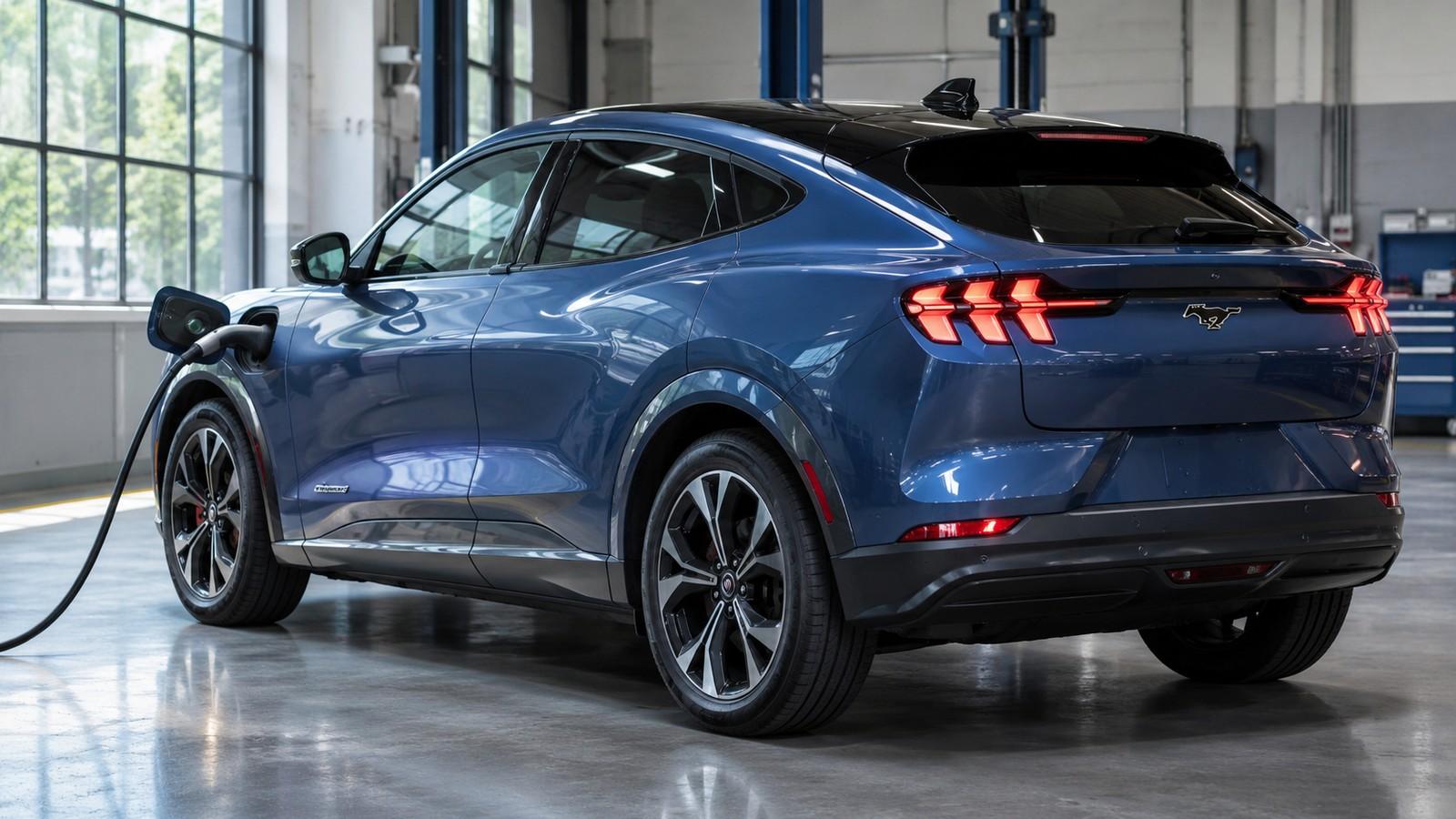
Representative image (AI-generated)
Ford went back and checked 36,000 of its oldest electric SUVs, and the batteries came back at 92% of the capacity they left the factory with. Five years on the road, and only eight points gone.
This is the kind of Ford Mustang Mach-E battery health data nobody usually publishes, because most carmakers do not want you to see it. Ford put it out on 9 November and it covers the "class of 2021": every 2021-model Mach-E sold in the US and Canada, which is roughly 36,000 cars. Forbes, which wrote up the study the same day, says the fleet has covered close to 2 billion miles between them.
What was actually measured
Ford pulled real battery state-of-health readings off the cars, not lab samples. The average car in the set had done 55,000 miles over 5.2 years, and was sitting at 92% capacity, per InsideEVs, which also interviewed Ford's technical lead for high-voltage battery cells.
In kilometres, because that is how we buy and sell cars here: 55,000 miles is about 88,500 km. So the average car in this study has done roughly 88,500 km and lost 8% of its pack.
The spread matters more than the average. 95% of the 36,000 cars landed between 87% and 97% health. That is a tight band. It means the result is not one lucky batch dragging up a pile of bad ones. Almost every car behaved the same way.
The high-mileage cars are where it gets interesting
Averages are easy to shrug off. Taxi-level mileage is not.
- Over 2,000 of these cars have crossed 100,000 miles (about 1,60,900 km). They averaged better than 91%.
- Around 30 cars have crossed 200,000 miles (about 3,21,900 km). They averaged 88%.
- Forbes says some owners have gone past 300,000 miles. Ford did not give a count for those.
Read the second line again. Over three lakh kilometres, and 88% of the battery is still there. Put that against how an Indian city car actually gets used: at 1,000 km a month, 3,21,900 km takes about 322 months, or close to 27 years. Even at a hard 2,000 km a month it is over 13 years. You will almost certainly sell the car long before the battery is the reason to.
One honest caveat: every car in this study runs an NCM pack. Ford only started putting LFP cells in the Mach-E from the 2023 model year. Most affordable Indian EVs today use LFP, which behaves differently. LFP is generally better on cycle life, a bit worse in cold, and nobody has a five-year, 36,000-car dataset on Indian LFP packs yet.
How it stacks up against other data
Ford's number is not an outlier. A separate study by Aviloo, built on about 500,000 battery tests and released in September, put the Mach-E at 92.5% at 150,000 km. The same study had the Tesla Model 3 at 88.9% and the Model Y at 90.3%.
Recurrent, which tracks used EVs that opt in, reports an average of 97% of original range after three years and 95% after five across the EVs it follows. Forbes cites Recurrent data showing tracked Teslas averaging 86% between 100,000 and 150,000 miles.
Different methods, different fleets, same direction of travel. Modern EV packs are not the four-year consumables people still assume they are.
What this means for you
The single biggest reason Indian buyers still walk out of an EV showroom is the battery. Not range, not charging: the quiet worry that in year six someone will quote you a number with six digits in it to replace the pack.
Three things this data changes:
Resale. The used EV market in India prices in a battery nobody can see. A 36,000-car, five-year dataset is exactly the kind of evidence that starts moving used EV valuations, because a buyer can finally argue from numbers instead of fear.
Warranty maths. Indian EV battery warranties are written as a years-and-kilometres limit with a minimum state-of-health threshold underneath. If a fleet like this averages 92% at 88,500 km, most cars are nowhere near the threshold when the cover runs out. Check the state-of-health number in your own warranty document, not only the years.
What to ask for. Ask the dealer for the car's battery state of health at service, and ask whether the brand will give it to you in writing. Ford could run this study because its cars report the data. The brands that will not show you a state-of-health reading are telling you something.
The EVGyan take
A carmaker publishing five-year degradation data is doing something slightly against its own short-term interest, and that is why it is worth paying attention to. The number is good, but the useful part is that it exists at all.
What we would like next is an Indian version. Tata, Mahindra, MG and Hyundai have between them put lakhs of EVs on Indian roads since 2020, in 45-degree summers and on roads that test a battery pack harder than a Michigan highway does. They have the telemetry. Somebody should publish it.
Not sure which EV is right for you?
Get the free EV Buying Decision Guide — real range vs claimed range, and a clear buy-or-wait answer based on your own situation.
Get the free buying guide →Sources
Get India's monthly EV sales data by email
Every month we pull the Vahan registration numbers apart — by segment, by state, by model — and send you what actually changed. No brand pressure, no hype.
One email a month. Unsubscribe anytime. See our privacy policy.
Read next



On This Page
Latest
- VinFast VF5 Facelift Revealed With a 43kWh Battery, and It Is Already Patented in India
- Tesla Model Y RWD Gets 43 km More Range, Price Unchanged
- Electric Defender Confirmed for 2027, Smaller Than the Defender 90
- Mahindra and Uber Are Going After 5,000 Electric Autos
- Mahindra M13Electro Brakes at 700 kW, Races at Just 450 kW
- Audi A4 e-tron Pushed to 2029 Over a 48-Volt Rethink
- COMAC CE-25A: China's 19-Seat Electric Plane Flies With a Crew