
Black Mass Export Ban Backs India's ₹1,500 Crore Recycling Push
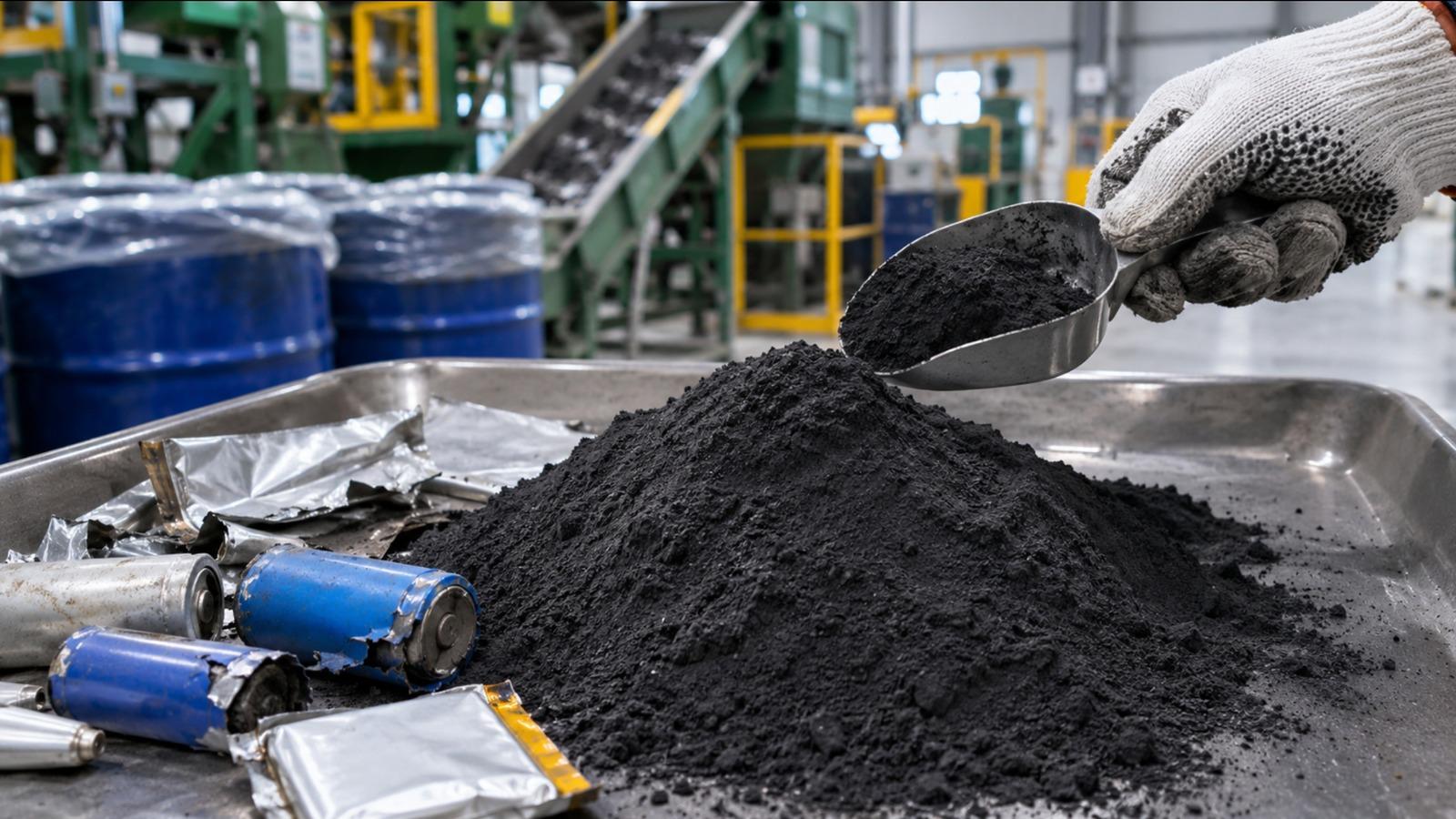
Representative image (AI-generated)
Last year India set aside ₹1,500 crore to get companies to pull lithium, cobalt and nickel out of old batteries. Now it has made sure the raw material for that job can't be shipped away. The black mass export ban, notified by the Directorate General of Foreign Trade (DGFT) on 10 November 2026, moves this battery powder from "Free" to "Prohibited" with immediate effect, until further orders.
What the notification covers
The order sits under ITC (HS) code 85491400. In plain words, that's waste and scrap from primary cells, primary batteries and electric accumulators, plus spent batteries, that are unsorted and free of lead, cadmium and mercury. The DGFT names it directly as lithium-ion battery black mass.
A few things to keep straight:
- Legal base: Sections 3 and 5 of the Foreign Trade (Development & Regulation) Act, 1992, with the Foreign Trade Policy 2023
- Shipments already in motion: handled under the transition rules in Para 1.05 of that policy
- Scope: only this category. It is not a ban on exporting batteries or every battery-related material
Black mass is what you get after a dead battery pack is taken apart and shredded. It looks like soot, but it's the most valuable thing a recycler makes, because the cathode and anode metals end up in it.
Why the government did it
The DGFT notice does not write out a reason. But the government's own recycling policy makes the direction easy to read, so we stuck to that rather than guessing.
In September 2025 the Union Cabinet cleared a ₹1,500 crore incentive scheme for critical mineral recycling, under the National Critical Mineral Mission. It runs from FY 2025-26 to FY 2030-31. The mines ministry expects it to build at least 270 kilo tonnes of recycling capacity a year, produce around 40 kilo tonnes of critical minerals a year, and pull in roughly ₹8,000 crore of investment.
Here's the catch. That scheme only rewards units that actually extract the metals. Plants that stop at making black mass don't qualify. So the money was going to the refining end, while a big share of the feedstock was leaving the country. Overseas refiners, mainly in Asia, have been paying Indian shredders well for it.
Exports were already tight before this. Black mass counted as hazardous waste, and shipping it out needed a nod from the environment ministry plus a DGFT licence. Even so, there were repeated industry complaints in 2025 about consignments going out under the wrong trade code. A flat prohibition closes that gap far more cleanly than a licence system did.
The link to your next EV is simple. Battery cells are the costliest part of an electric scooter or car, and India imports most of the minerals inside them. Every kilo of lithium or nickel recovered here is a kilo that doesn't need to be bought abroad. That fits with the Centre's other battery moves, like the VGF scheme for battery storage.
Who wins, who has to adjust
India's recyclers come in two kinds. Shredders break batteries down into black mass. Refiners take that powder and turn it into battery-grade metal salts.
Refiners get a steady supply and better use of their plants. Shredders, who are the larger group, lose their best-paying customers overnight and now have to sell at home. Some in the industry had asked for a phased approach for exactly this reason.
The EVGyan take
This is the right call, and the timing is good. As India's early electric scooters and cars age, more and more battery packs will reach end of life, and India would rather own that "urban mine" than sell it cheap.
Two things will decide whether it works. Customs has to catch black mass going out under fake descriptions. And domestic refiners have to pay shredders a fair price. If they lowball, the powder will just slip into informal channels, and nobody wins.
Get both right, and the battery in a future Indian EV could carry metal that came out of an old Indian EV.
Get India's monthly EV sales data by email
Every month we pull the Vahan registration numbers apart — by segment, by state, by model — and send you what actually changed. No brand pressure, no hype.
One email a month. Unsubscribe anytime. See our privacy policy.
Read next

On This Page
Latest
- VinFast VF5 Facelift Revealed With a 43kWh Battery, and It Is Already Patented in India
- Tesla Model Y RWD Gets 43 km More Range, Price Unchanged
- Electric Defender Confirmed for 2027, Smaller Than the Defender 90
- Mahindra and Uber Are Going After 5,000 Electric Autos
- Mahindra M13Electro Brakes at 700 kW, Races at Just 450 kW
- Audi A4 e-tron Pushed to 2029 Over a 48-Volt Rethink
- COMAC CE-25A: China's 19-Seat Electric Plane Flies With a Crew