Hyundai's India-Korea EV Bet: 83% Local Parts, Cells Still Imported
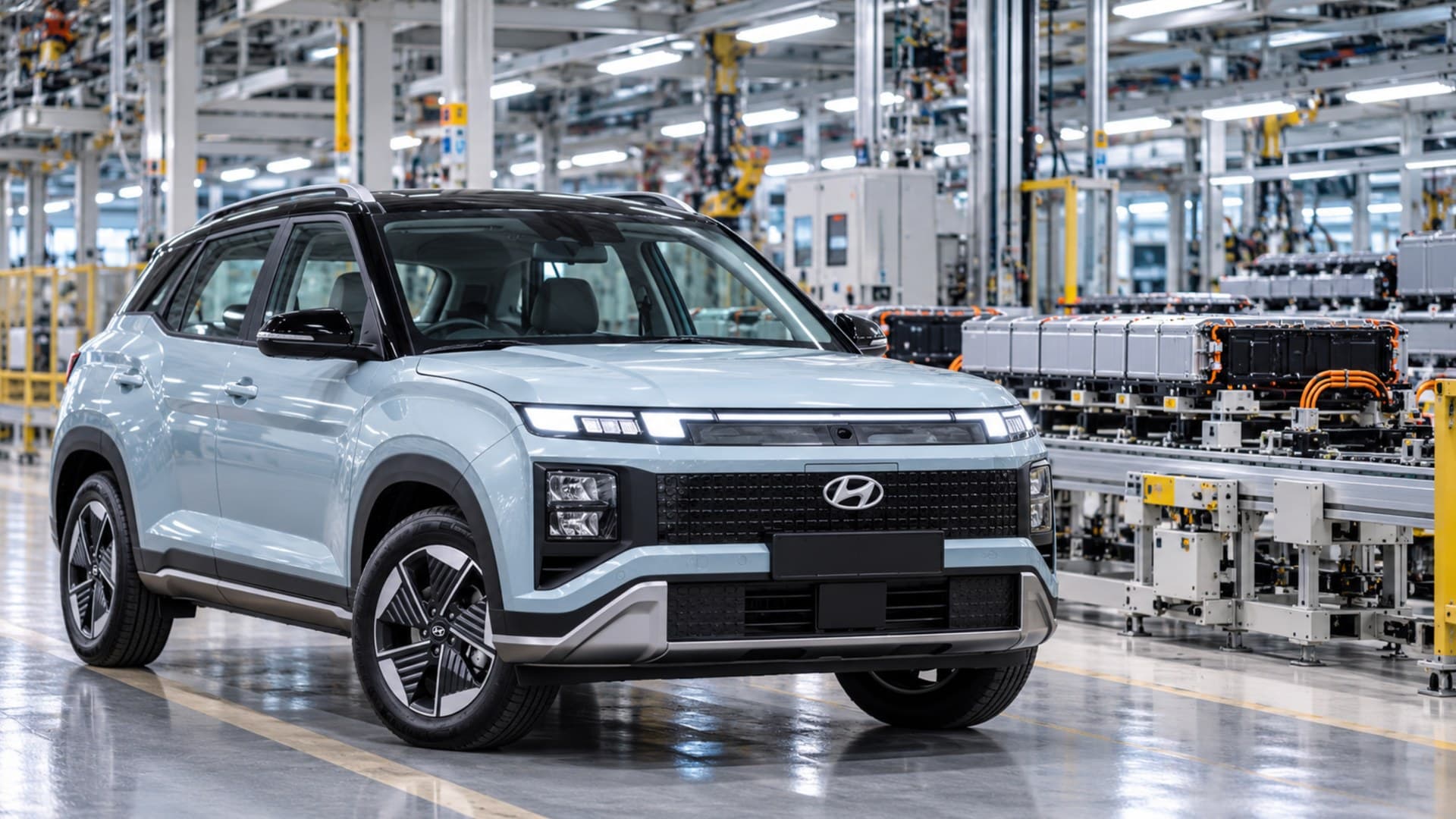
Representative image (AI-generated)
Hyundai buys 83% of its India components locally, wants that at 92% by 2032, and still has to import the battery cells for its next EV. That one gap explains why Hyundai Motor India CEO Tarun Garg is talking about India and South Korea as a pair.
Speaking at the Autocar Professional India EV Conclave in New Delhi on 27 October, Garg said the two countries together can offer a competitive alternative to China in EVs. Not a replacement. An alternative. Autocar Professional reported his remarks.
India brings the cost, Korea brings the tech
Garg's argument has two halves. China leads mainly on price. On that front, he said India is the closest challenger, thanks to its supplier base and manufacturing cost. On technology, South Korea sits closest to China. Put the two together, and a Korean-Indian carmaker gets something close to the full package.
Hyundai is the obvious test case. Its parent group has committed $15.5 billion to India between 2026 and 2032. Exports were about 25% of Hyundai India's output last year, up from roughly 20% five years ago, and the target is 30%.
Where the plan is still catching up
Battery packs are already made in India. Power electronics and the integrated charging control unit are being readied for local production before the next EV launches. Cells are the slow part. Garg said cell localisation has taken longer than planned: the upcoming compact electric SUV will start on cells from China's Svolt and move to Exide's Indian cells later, because Exide's timeline slipped.
That is the honest version of the India-Korea story. The pairing works for assembly, engineering and exports today. For the single most valuable part of an EV, it still runs through China.
Garg also flagged two risks: rising raw material prices, and what happens to EV pricing if PLI benefits end. He is not alone there. Ather's Tarun Mehta and Tata's Shailesh Chandra have both said on recent calls that cell and component supply, not demand, is what limits them right now.
What this means for you
For buyers, the 83%-to-92% localisation push is the number to watch. The more of the car that is built in India, the less its price swings with the dollar and the yuan. The first Hyundai small EV will still carry some imported-cell cost. The second batch, on Exide cells, is where the India-Korea idea either shows up in the price tag or doesn't.
The EVGyan take
Garg is right that India can't match China on cost alone, and Korea can't match it on scale alone. Together they can. But "alternative to China" only becomes real when the cells are Indian, and on Hyundai's own timeline that is a 2027-28 story, not a 2026 one.
On This Page
Trending
- Hero VIDA UBX 06 Pro Electric Bike Could Launch in India in 2027, Here's What We Know
- Hero VIDA VX2 Wireless Charging Revealed: Charge Without Plugging In
- Hero VIDA Project VXZ: New Electric Motorcycle Showcased at EICMA 2026
- Mahindra Electric SUV Output Jumps 50% to 12,000 a Month
- ChargeZone's 1,000 New Sites Will Carry 480kW Chargers
- Tata iRA.ev App: 4 High-Severity Flaws, Already Patched
- Gadkari Proposes ₹3/Unit Night EV Charging for Maharashtra