Hyundai Let the Name Slip: Meet the Ioniq P
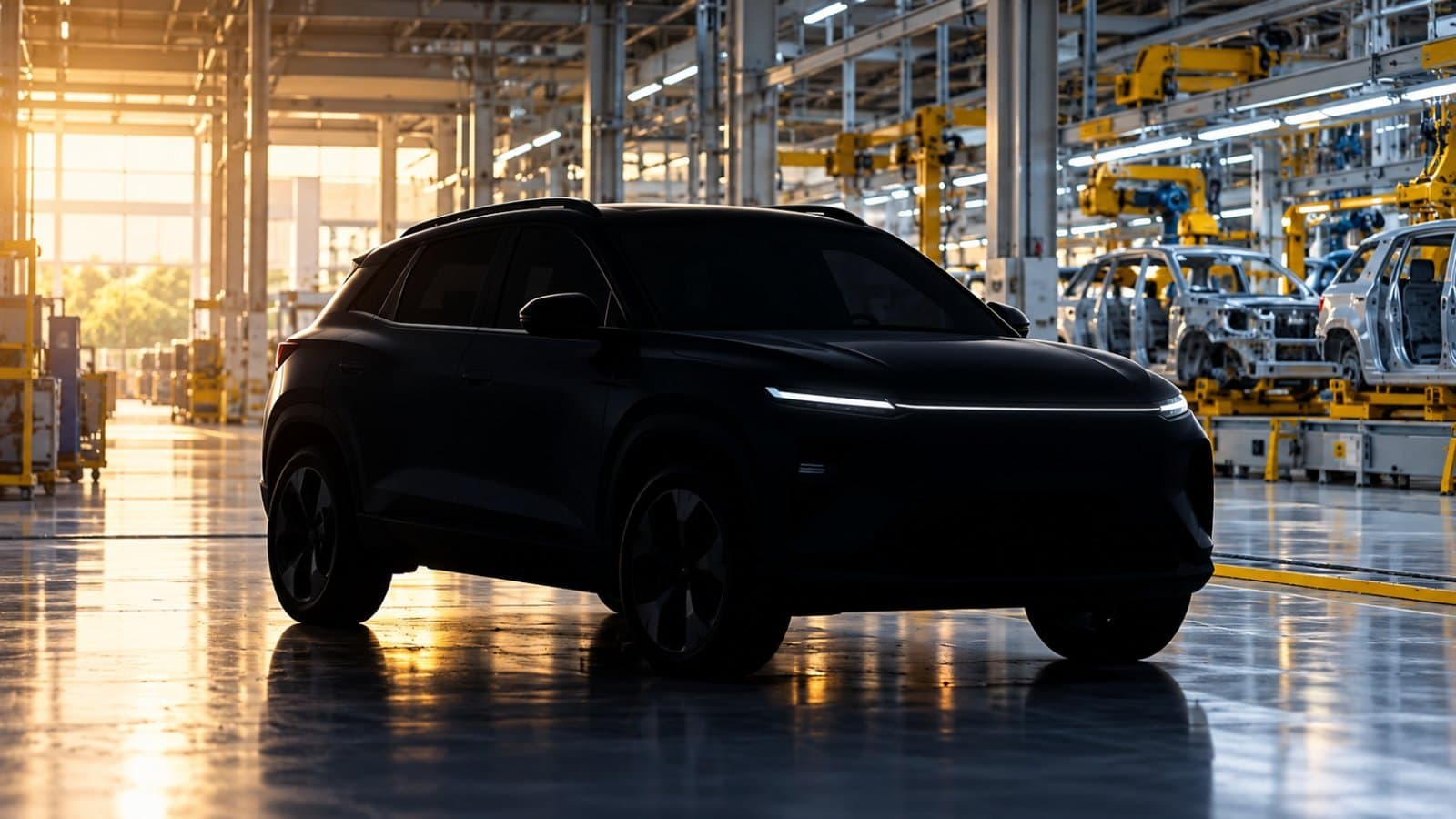
Representative image (AI-generated; not the actual Ioniq P)
Hyundai's small electric SUV for India finally has a name, or at least a very loud hint of one. On its third-quarter earnings call on 29 October, Hyundai Motor's management listed its next India launches as the Bayon and the "IONIQ P". That's the first time the Hyundai Ioniq P name has come up for the made-in-India EV that has been testing on our roads for months.
One small catch. Hyundai Motor India hasn't officially confirmed the name yet. But when the parent company says it to investors, it's usually more than a slip of the tongue.
What Hyundai has actually confirmed
Here's what the company itself has put on record:
- Codename HE1i, a compact electric SUV designed and localised for India
- Debut by March 2027, which is the last quarter of Hyundai's FY27. Autocar India's sources point to January.
- Level 2 ADAS and a new-generation infotainment system
- It slots in under the Creta Electric. Hyundai currently sells only two EVs here, the Ioniq 5 and the Creta Electric, so this is number three
The timeline has moved around a bit. Hyundai first said March 2027, then Hyundai India CEO Tarun Garg talked about the end of 2026, and now early 2027 looks like the target. Either way, it's close.
Battery and range: still a guessing game
Hyundai hasn't shared battery or range figures, so treat any number you see online with a pinch of salt.
Autocar India reports that the car uses the E-GMP (K) platform from the Hyundai Inster sold abroad, and will come in Standard Range and Long Range versions. Hyundai India CEO Tarun Garg told Autocar Professional that the car will start on cells from China's Svolt and move to Exide's Indian cells later, because Exide's timeline slipped. CarWale expects the Ioniq P to share a lot with its Kia cousin, the Syros EV, which offers 42 kWh and 51.4 kWh packs and a claimed range of up to 526 km. We'll know which guess is right when Hyundai pulls the cover off.
Who it has to beat
The Ioniq P walks into one of the busiest EV segments in India. The Tata Nexon EV, Mahindra XUV 3XO EV and Kia Syros EV are already here, and the Syros EV starts at Rs 13.49 lakh (ex-showroom). That's roughly the price bar Hyundai has to match or beat, and heavy local production is how it plans to get there.
The EVGyan take
Hyundai has been late to mass-market EVs in India. According to Autocar India, EVs made up only about 1 percent of Hyundai's India sales in FY26. The Ioniq 5 is a premium product, and the Creta Electric plays a segment higher. A locally built, Nexon-sized EV is the car that can actually move that number, and Hyundai has 26 launches lined up for India by 2030 to back it up.
For buyers, more competition in the Rs 13–20 lakh EV space only means sharper prices and better features. If you're shopping in this budget and aren't in a rush, waiting for the Ioniq P's price in early 2027 won't hurt.
Not sure which EV is right for you?
Get the free EV Buying Decision Guide — real range vs claimed range, and a clear buy-or-wait answer based on your own situation.
Get the free buying guide →On This Page
Trending
- Hero VIDA UBX 06 Pro Electric Bike Could Launch in India in 2027, Here's What We Know
- Hero VIDA VX2 Wireless Charging Revealed: Charge Without Plugging In
- Hero VIDA Project VXZ: New Electric Motorcycle Showcased at EICMA 2026
- Mahindra Electric SUV Output Jumps 50% to 12,000 a Month
- ChargeZone's 1,000 New Sites Will Carry 480kW Chargers
- Tata iRA.ev App: 4 High-Severity Flaws, Already Patched
- Gadkari Proposes ₹3/Unit Night EV Charging for Maharashtra