
CATL Lithium-Air Battery: The 2,000 km Claim CATL Never Made
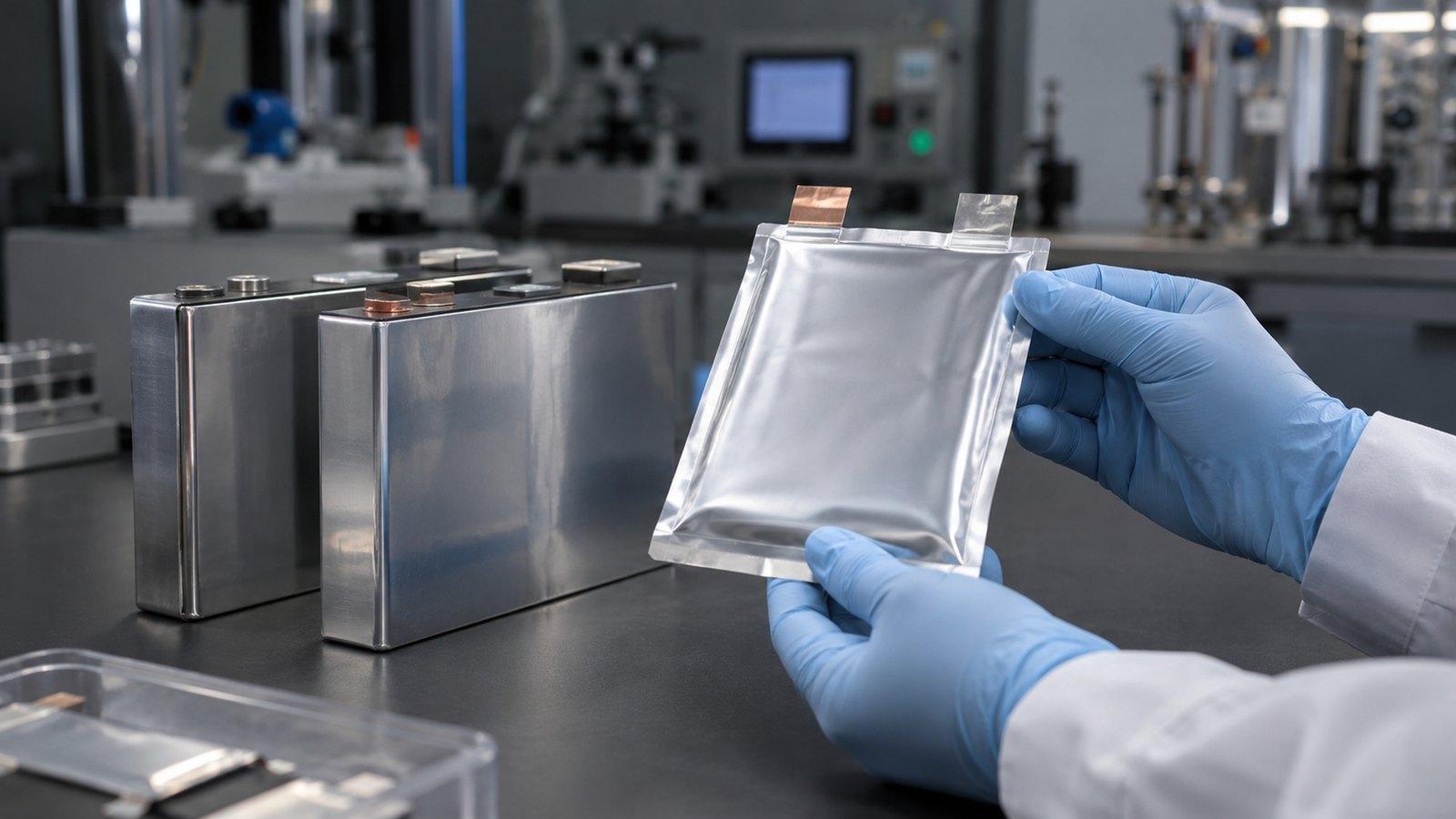
Representative image (AI-generated)
A number has been doing the rounds this week: 3,505 Wh/kg. That is the theoretical energy density of a lithium-air battery, and it is roughly twelve times what the cells in your EV manage today. Chinese tech site IT Home tied that figure to a 2,000 km driving range, and to an energy density five times what solid-state cells are promising. The number travelled fast.
Here is the part that got lost on the way. CATL has not promised 2,000 km. What actually happened is smaller and more honest: speaking at the 2026 Equipment Powerhouse Forum, CATL chief scientist Wu Kai put lithium-air on the company's list of things worth researching over the long term. That is the whole announcement. No target range, no prototype, no launch date.
What a lithium-air cell actually does
Most EV cells carry both reactants inside them. A lithium-air cell carries only one. Lithium metal sits on the negative side, and the positive reactant is oxygen pulled straight from the air around the car.
While you drive, lithium reacts with that oxygen and forms lithium peroxide inside a sponge-like cathode, releasing electrons on the way. Charging is supposed to run the whole thing backwards, breaking the lithium peroxide apart and pushing the oxygen back out.
Because the cell does not have to carry its own oxidiser, the theory looks spectacular. Today's lithium-ion cells sit at roughly 200 to 300 Wh/kg. Advanced solid-state cells are targeting 350 to 500 Wh/kg. The lithium-peroxide reaction, counted with the mass of the oxygen included, tops out at about 3,505 Wh/kg. Drop the oxygen mass from the calculation and you can get the figure close to 12,000 Wh/kg, which is where some of the wilder headlines come from.
Neither figure is a battery pack. A pack also needs electrolyte, electrodes, a casing, cooling and, for this chemistry, machinery to handle air.
The lab numbers, which are much smaller
This is where the story gets useful, because lithium-air cells have been built and measured.
The best pouch cell published so far came out of a Jilin University and Chinese Academy of Sciences team in 2024, in Advanced Energy Materials. It hit 757.5 Wh/kg and ran 241 cycles under lab conditions. A separate 2023 Science paper from Illinois Tech and Argonne took a different route, a solid-state design using a four-electron reaction, and cleared 1,000 room-temperature cycles with an estimated 1,200 Wh/kg.
Put 757.5 against 3,505 and the best cell anyone has actually built delivers about 22% of the theory. That is not a failure. It is simply the distance between a chemistry equation and a product.
The 241 cycles number is the one worth sitting with. Charge an EV twice a week and you use 104 cycles a year. At that rate, 241 cycles runs out in a little over two years and three months. An Indian buyer keeps a car for a decade. Nobody is selling a two-year battery.
The air problem nobody can design away
Pulling oxygen from the air also pulls in everything else in the air.
Moisture and carbon dioxide react inside the cell and leave behind deposits that choke the porous cathode. Lithium peroxide itself is a solid, and charging does not fully clear it out, so usable capacity drops with every cycle. The fix is filtration, humidity control and gas handling built into the vehicle. A 2023 study in the Journal of Energy Storage put a figure on that for its own proposed design: the air-handling hardware would eat 5.4% of the battery's own output just to keep the cell breathing.
Then there is everything a car needs beyond energy density. Volumetric density, so the pack fits under the floor. Power density, so the thing can actually accelerate. Heat management, because a lithium-air cell's round-trip efficiency is poor and the losses come out as heat. Energy density alone has never sold a single EV.
Where this leaves India
Honestly, nowhere, for now. And that is fine.
For perspective, the longest claimed range on sale here is the Mahindra XEV 9e at 656 km from a 79 kWh pack, with the Tata Harrier EV at 622 km from 75 kWh. A 2,000 km car would need roughly three times the XEV 9e's claimed range. No Indian buyer is waiting for that. What they are waiting for is the same range at a lower price, and that is a cost problem, not a chemistry ceiling.
The genuinely good news sits in the same CATL statement, in the part nobody quoted. CATL's near-term work is sodium-ion and all-solid-state. Those two will reach Indian showrooms in this decade. Sodium-ion in particular matters here, because it skips lithium entirely, and India imports almost all of its lithium. Lithium-air is the long shot kept in the back of the lab; sodium-ion is the one that could change what a ₹10 lakh EV looks like.
It is also worth remembering that this is not the first run at it. IBM's Battery 500 project launched in 2009 chasing 805 km on a charge from lithium-air. Seventeen years later, there is no commercial lithium-air battery anywhere. The chemistry has been "ten years away" for most of that time.
The EVGyan take
A company putting a chemistry on its long-term research list is good news. It means the best battery team in the world has not stopped looking for the next step, and CATL can afford to fund a long shot in a way a startup cannot.
But the gap between 3,505 Wh/kg on a whiteboard and 757.5 Wh/kg in a pouch cell that dies in 241 cycles is the whole story, and it is the part that got skipped. If a lithium-air EV ever shows up, it will probably appear first somewhere weight matters more than cost and cycle life, like a high-altitude drone, and not in a family car.
Treat any 2,000 km headline you see this week the same way you treat a claimed range figure on a brochure. Ask what was measured, and who measured it.
For the battery technology that is actually being built in India right now, read our pieces on the ₹14,500 crore battery storage push and battery swapping for electric trucks.
Sources
Get India's monthly EV sales data by email
Every month we pull the Vahan registration numbers apart — by segment, by state, by model — and send you what actually changed. No brand pressure, no hype.
One email a month. Unsubscribe anytime. See our privacy policy.
Read next
On This Page
Latest
- VinFast VF5 Facelift Revealed With a 43kWh Battery, and It Is Already Patented in India
- Tesla Model Y RWD Gets 43 km More Range, Price Unchanged
- Electric Defender Confirmed for 2027, Smaller Than the Defender 90
- Mahindra and Uber Are Going After 5,000 Electric Autos
- Mahindra M13Electro Brakes at 700 kW, Races at Just 450 kW
- Audi A4 e-tron Pushed to 2029 Over a 48-Volt Rethink
- COMAC CE-25A: China's 19-Seat Electric Plane Flies With a Crew