Toyota E-Drive Line Gets ₹460 Crore, and It's All Hybrid
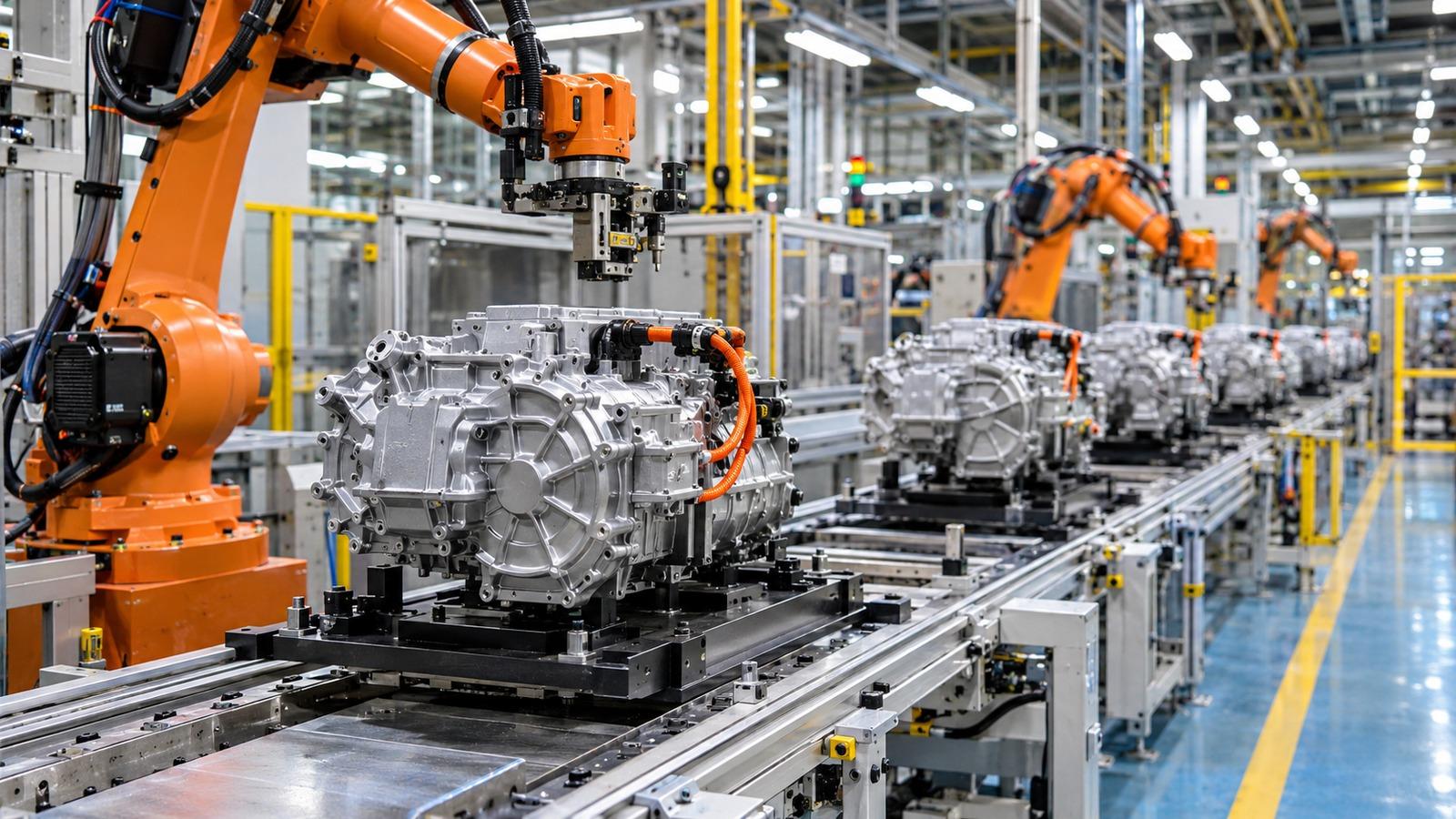
Toyota has switched on a new E-Drive line at Bidadi near Bengaluru, built with about ₹460 crore, and it will turn out 2 lakh units a year. Not one of those units will go into a battery-electric car.
The new Toyota E-Drive line sits inside Toyota Kirloskar Auto Parts (TKAP) and takes the company's total E-Drive capacity to 3.6 lakh units a year. The existing fourth-generation line, running since 2022, keeps going alongside it. The new one builds the fifth-generation unit.
So what is an E-Drive?
Think of it as the electric heart of a Toyota hybrid. The motor, the generator and the transaxle are packed into one housing. It is the bit that lets a hybrid crawl through traffic on battery power for short stretches, then hand back to petrol when you need the speed.
Toyota's hybrids are the self-charging kind. There is no plug, no charging cable and no overnight parking problem. The battery tops itself up from the engine and from braking.
That is also why this is not an EV story in the way the ₹460 crore number makes it sound.
The numbers
- Investment: about ₹460 crore
- New capacity: 2 lakh units a year
- Total E-Drive capacity: 3.6 lakh units a year
- Part of a ₹4,800 crore MoU between Toyota Group companies and the Karnataka government
- Covered by the PLI scheme's Advanced Automotive Technology category, which rewards local output of parts like this
Dr S. Selvakumar, Principal Secretary in Karnataka's Commerce and Industries Department, opened the line. Manasi Tata, Vice Chairperson at Toyota Kirloskar Motor, called it a milestone in localising electrified technology in India.
The EVGyan take
It would be easy to read this as Toyota dragging its feet. That is only half right.
Toyota is in the EV game here. It opened bookings in January for the Urban Cruiser Ebella, which it calls its first battery EV in India, with 49 kWh and 61 kWh LFP packs and a claimed 543 km on the ARAI cycle for the bigger pack.
But look at where the capital went this week. Hybrid hardware, not EV hardware.
Here is the part worth holding on to. An E-Drive is a motor, an inverter and a gearset. Those are the same family of parts a battery EV needs, from the same suppliers, on the same machines, made by people learning the same skills. A plant turning out 3.6 lakh electric drive units a year in Karnataka is a supplier base an EV line can tap later. Every unit also replaces an import.
India's EV problem has never really been demand. It has been the depth of the parts industry behind it. This line makes that industry deeper, even if the car it feeds still has a fuel flap.
What this means for you
Buying a Toyota hybrid? More local capacity usually means shorter waiting periods and less imported cost sitting inside the sticker price.
Waiting for a cheaper Toyota EV? Nothing announced here changes that timeline. This line does not put a new EV in a showroom near you.
Sources
Get India's monthly EV sales data by email
Every month we pull the Vahan registration numbers apart — by segment, by state, by model — and send you what actually changed. No brand pressure, no hype.
One email a month. Unsubscribe anytime. See our privacy policy.
Read next
Latest
- Accelero's eBik Jumps From 3,000 to 12,000 Units a Year
- CATL Is at 2,520 Swap Stations and Wants 3,000 by December
- China Exported 582,000 EVs in October, 16x India's Market
- China Rare Earth Curbs Delayed to 10 January: India's EVs Get 60 Days
- Force Traveller EV Arrives Q1 2027, ₹3,000 Crore Behind It
- Honda Ohio Plant: $3 Billion for Hybrids, Not EVs
- HPCL EV Charging Network Now 5,981 Points, 176 for Swapping