
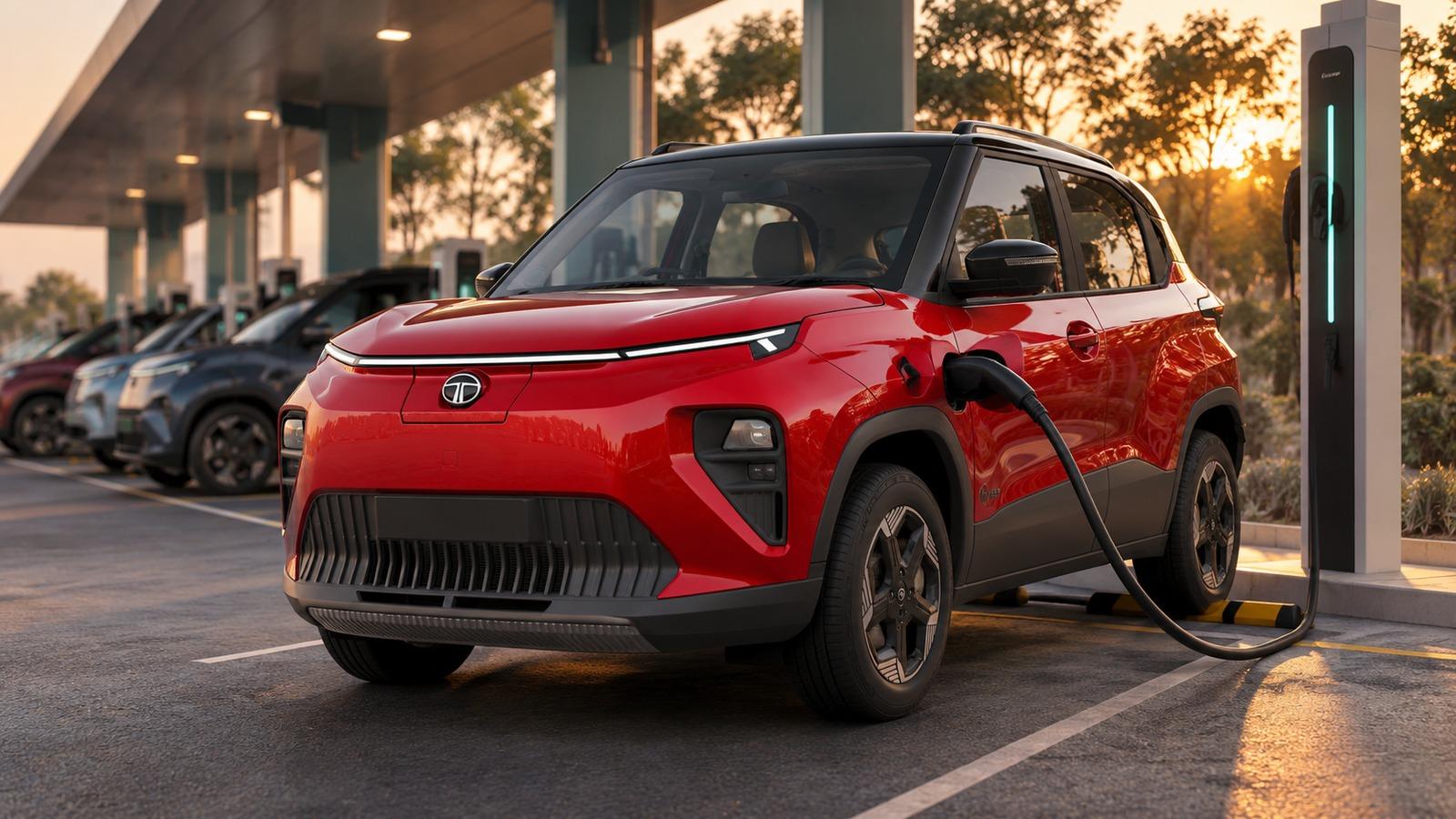
Tata EV sales crossed 1.24 lakh units in the first ten months of 2026. Put next to everything else the company dispatched in that time, that works out to 19.21% of its passenger vehicles. Close to one in five Tatas leaving the factory now runs on a battery.
The same ten months did something else for Tata. Its January-October total of 6,49,477 units is already 70,705 more than the company managed in the whole of 2025, when it ended the year on 5,78,772. Two months of the calendar are still left. Rushlane, which pulled the monthly numbers together, works the gap out at 12.22% over last year's full-year figure.
These are wholesales, so they count cars sent to dealers rather than cars handed to buyers. The retail picture is close behind, and we will get to it.
October was the best month of the year
Tata dispatched 73,894 passenger vehicles in October 2026. That beats October 2025 by 20.87% and September 2026 by 7.39%, and it is the highest single month of the first ten.
The model split explains a lot of it:
- Punch: 2,02,794 units, already 29,292 ahead of its own 2025 total
- Nexon: 1,96,490 units, 4,071 short of its 2025 total
- Sierra: 69,779 units
- Tiago: 70,555 units
- Harrier: 31,810 units, against 27,410 in all of 2025
- Curvv: 18,447 units
Punch and Nexon together are 3,99,284 units, or 61.48% of everything Tata sold this year. Both nameplates sell in petrol, diesel, CNG and electric form, which is exactly why Tata's EV share has climbed the way it has. The buyer does not have to switch brand or body style to go electric. They pick a different badge on the same car.
The retail numbers back it up
Wholesales can run ahead of demand, so the Vahan registration data is the better check. An analysis of Vahan retails published on 12 November has Tata at 1,20,895 electric passenger vehicle registrations between 1 January and 9 November 2026. Against the 1,24,792 wholesale figure for a slightly shorter period, that is a normal gap. Dealers are not sitting on a mountain of unsold EVs.
Two more numbers from that data put Tata's year in context:
- India registered 3,04,701 electric cars and SUVs between 1 January and 9 November, up 66% year on year. The whole of 2025 was 1,95,571.
- Tata's 1,20,895 is about 40% of that. Its own 2025 figure was 76,644, so it is running 58% ahead of itself.
Tata also became the first carmaker in India to register more than 1,00,000 electric passenger vehicles in a single calendar year. It got there in September. Its strongest month on Vahan was September, with 15,719 registrations, or 41% of the 38,440 electric cars India registered that month.
Why the 19.21% figure matters more than the total
A lot of brands can point at a big EV number. Very few can point at a big EV share, because share is what tells you whether electric is a side project or the main business.
At 19.21%, Tata is selling roughly one electric car for every four petrol, diesel or CNG ones. Compare that with where the overall market sits: FADA's October retail data put EVs at 7.30% of all passenger vehicle sales in India that month. Tata is running at well over twice the national rate.
That share is also the reason Tata keeps winning the EV volume race even when a rival launches something sharper. The Punch and the Nexon are not EV-first products that happen to have petrol versions. They are mass-market cars with an electric option sitting in the same showroom, at the same dealer, in front of the same walk-in customer. Every month that puts tens of thousands of first-time EV buyers in front of a battery-powered car they were not actively shopping for.
What this means for you
If you are buying in the next few months, three things follow from these numbers.
Supply should be the least of your worries on a Punch.ev or a Nexon.ev. Tata just had its biggest month of the year and is running its factories accordingly. Waiting periods on the volume variants are unlikely to be the problem they were two years ago.
Resale should keep holding up. A car with 2,02,794 units of its nameplate on the road this year alone has a deep used market and a service network that has seen the car before. That matters more on an EV than on a petrol hatchback, because the second owner's biggest worry is who will look at the battery.
Discounts are a different story. A company hitting record months has less reason to push cash on the bonnet. If you were waiting for a big year-end deal on a Tata EV because sales were slow, the data says sales are not slow.
The EVGyan take
The honest read is that Tata's EV business is now big enough that it stops being a growth story and starts being a base. Nearly a fifth of the company's output is electric, it holds about 40% of India's electric car market, and it has already beaten its own best-ever year with two months in hand.
The pressure from here is different. Holding 40% share while Mahindra, MG and now BYD's Denza all push harder is a tougher job than getting to 40% was. And the 19.21% figure has an awkward flip side: 80.79% of what Tata sells still burns fuel. That is the number to watch next year.
One caveat worth repeating. The Jan-October wholesale and EV-share figures come from Rushlane's compilation of Tata's monthly disclosures; the registration figures are Vahan data. The two measure different things and should not be added together.
Sources
Get India's monthly EV sales data by email
Every month we pull the Vahan registration numbers apart — by segment, by state, by model — and send you what actually changed. No brand pressure, no hype.
One email a month. Unsubscribe anytime. See our privacy policy.
Read next
On This Page
Latest
- Accelero's eBik Jumps From 3,000 to 12,000 Units a Year
- CATL Is at 2,520 Swap Stations and Wants 3,000 by December
- China Exported 582,000 EVs in October, 16x India's Market
- China Rare Earth Curbs Delayed to 10 January: India's EVs Get 60 Days
- Force Traveller EV Arrives Q1 2027, ₹3,000 Crore Behind It
- Honda Ohio Plant: $3 Billion for Hybrids, Not EVs
- HPCL EV Charging Network Now 5,981 Points, 176 for Swapping